The Lardner Report

Unleash your creative superpowers!

  • Home
  • Creative Voltage Website
  • Contact
  • Archives
  • About

Art Underfoot

April 30, 2016 by Lonnie Lardner

blue walkway / Kaplan

(Pic #1) Gorgeous stained cement walkway spotted in Ventura, California. Photo by Josh Kaplan

One more argument against walking while texting: the beauty below.

While Fort Lee New Jersey has already passed a law banning texting while walking, other towns are considering the move, in an effort to make streets safer. I applaud it — but for a slightly different reason.  Just look what you miss. If your face is buried in the small screen, chances are pretty pharmacy no rx slim you’d see the art beneath your feet just waiting to be discovered.

I grabbed the pictures below with my iPhone while on a walk on the streets of Calabasas. I swore off texting while walking on this day, and feel the universe rewarded me with these.

IMG_8148-2

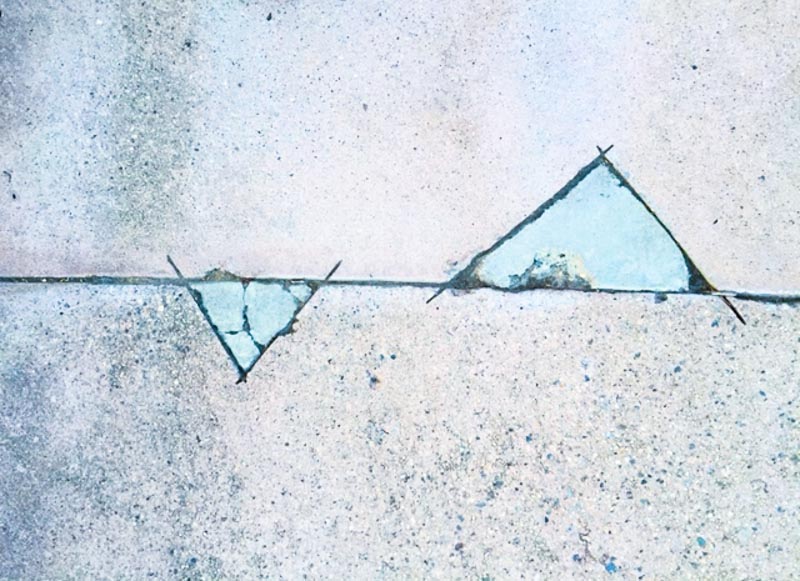
(Pic #2) Quirky geometric “sidewalk sketches” in Calabasas, California.

IMG_8147

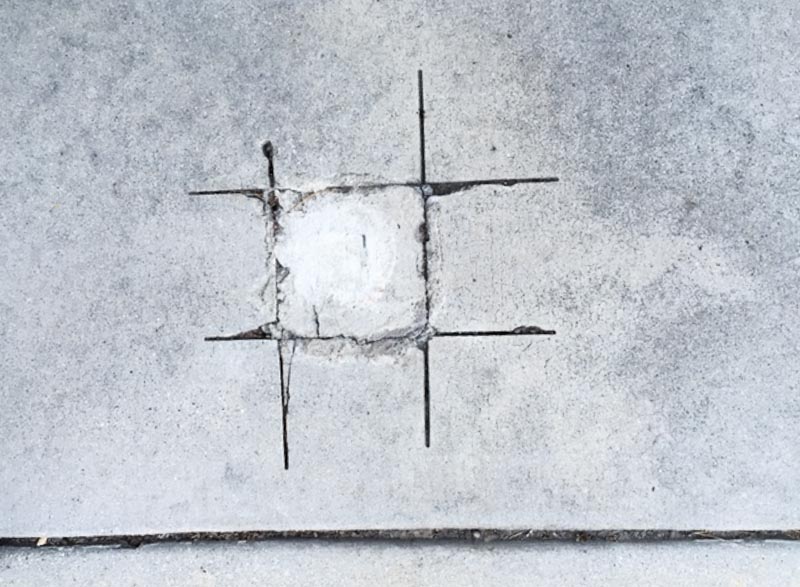
(Pic #3) An insecure start to a game of Tic-Tack-Toe, carved into the sidewalk in Calabasas, California.

Filed Under: Found Art Tagged With: art is everywhere, art underfoot, found art, sidewalk art, sidewalk studio, street art

The Fish That Makes Art

January 31, 2016 by Lonnie Lardner

True love found 80 feet down on the ocean floor.

Puffer close upjpg

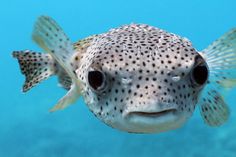
(Pic #1) Close-up, creative pufferfish.

I think my husband could be a slacker. Look what this minuscule (5-inch) creature can pull off — in 10 days’ time —  to attract a mate.  Josh is always trying to find new ways to court me,  and I think I need to share this report.

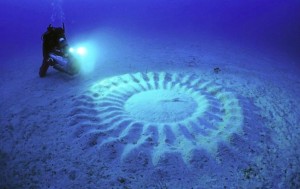
Not long ago, off the southern tip of Japan, a dedicated oceanic photographer named Amami Oshima discovered what he initially called a “mystery circle” —  a shockingly intricate, rippling geometric pattern nearly 6-feet wide on the ocean floor.  Well it turns out, the master architect of this stunning example of “environmental art” is a tiny pufferfish.  He creates the mandala-like nest with his fins, digging furrows to attract the attention of passing female puffers (Click video, above.)

Before the female fish arrives to inspect his handiwork, the male forms quirky patterns in the fine sand of the central circle. He also decorates the peaks of the outer portion with shells and fragments of coral. (In contemporary art, we would tramadol call this texturizing or creative use of “found objects.”) Scientists believe, “when a potential female partner arrives on the scene, the male stirs up the fine sand in the nest’s inner circle. If she deems the nest (and the male who built it) satisfactory, she lays her eggs and leaves.”

Photographing puffer copy JPG BBC

(Pic #2) For a sense of scale: A male pufferfish (center) photographed by crew in 2012. Photo courtesy Kimiaki Ito.

Experts aren’t sure exactly what the females are looking for when they assess a male’s nest. It could be the patterns of fine sand, the decorations on the outside, or the nest’s size or perfect symmetry. But they do know that because the process is so time-consuming, a larger nest could indicate a stronger or “more fit”male suitor — both desirable traits to females.

Dudes: Take note.

FISHY FUN FACT: According to the National Oceanic and Atmospheric Administration less than five percent of the world’s oceans have been explored, meaning that 95% of what lies deep underwater on Earth has yet to be seen by human eyes.

Filed Under: Eco-Art, Found Art, Newsmakers Tagged With: fish who make art, male-female attraction, nature under the sea, nest-making, oceanic crop circles, oceanic mysteries, pufferfish

Today’s Pic: Discovering Nature’s Stunning Art Show

August 31, 2015 by Lonnie Lardner

Mail Attachment

(Pic #1) Praying Mantis captured by Amy Eyrie in Calabasas, California

It’s never about “looking” for the moment — it’s about being receptive to it.

My yoga teacher Amy Eyrie has walked past this iron gate hundreds of times. She passes it every time she teaches a class at our gym. On this day, she noticed something different, and decided to grab her iPhone. She stopped to take the obligatory wide shot to document the occasion, and then realized there was something else going on: Art in the making.

Closing in, Amy saw the two planes of color xanax (left: violet, and right: dusty rose) showcasing the delicate beauty of this insect’s willowy limbs. She zoomed in, and captured this “painting” with perfect composition and line. The color was not altered here. And it may not be coincidence that the mantis’s underbelly matched the deep purple of the gate. It’s the perfect alignment of timing, light, and photographer’s instinct.

I sort of think nature wants us to discover her creative moments. It’s how she can connect with us and earn our respect. We just have to be kind enough to notice.

Filed Under: Found Art Tagged With: art in nature, capturing moments, iPhone photography, nature photography, praying mantis

  • « Go to Previous Page
  • Page 1
  • Interim pages omitted …
  • Page 8
  • Page 9
  • Page 10
  • Page 11
  • Page 12
  • Interim pages omitted …
  • Page 21
  • Go to Next Page »

Subscribe here:

Categories

  • Art Table Tips
  • Artist Spotlight
  • Creative Zone
  • Eco-Art
  • Found Art
  • Newsmakers
  • Quotes
  • Reflections
  • Travel
  • Uncategorized

Archives

Hey Brubeck, Take THIS.

The Alien And The Volcano: Why Do Our Brains Need to Make Order Out of Chaos?

Wait — So How Do YOU Choose a restaurant?

Meet Creative Voltage!

Sometimes Your Cat Just Makes The Art FOR You

2026: Kicking Fear to the Curb

Choosing Gratitude. But for a paintbrush?

Every Page Is A Treasure: Discovering Plastikcomb

Calling all artists — INKTOBER is here! Whaaaaa?

Art From The Ashes

One Click — One Masterpiece?

When Art F*cks With Your Head

The Perfect One-Liner

Portland: A Tale Of One City – Through Two Lenses

Happy New Year!

Allowing The Moment To Emerge

How Can A 5-Year-Old Be My Muse?

Stunning, Simple Beauty

An Unexpected Collaboration With Nature

Pathetic Shoe Obsession: WTF?

Copyright © 2026 · Dynamik-Gen on Genesis Framework · WordPress · Log in