The Lardner Report

Unleash your creative superpowers!

  • Home
  • Creative Voltage Website
  • Contact
  • Archives
  • About

Today’s Pic: The Art Of Urban Decay

February 28, 2012 by Lonnie Lardner

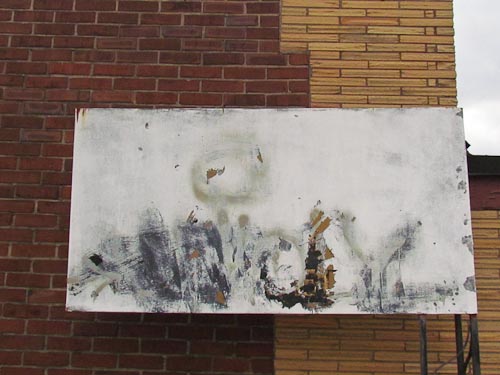
(Pic#1) Nashville sign: Finding beauty in decrepitude.

I may be obsessed, but these things just seem to find me. Driving through downtown Nashville yesterday, in a funky little section called the Melrose District, I passed a sign that truly seemed to scream at me. (Pic #1 and Pic #4) It had clearly seen better days, or maybe years, but its wear-and-tear left a gorgeous abstraction of rich browns, blacks, and  grey smudges.

I belted out a loud “STOP!” to my friend Susan, and bless her loyal soul — she hit the brakes. She didn’t understand why, but she knew I was on a mission. I bolted out of the car and grabbed the shot. She and her colleagues Sherri and Poonam might have been bumfuzzled, but were very polite about it.

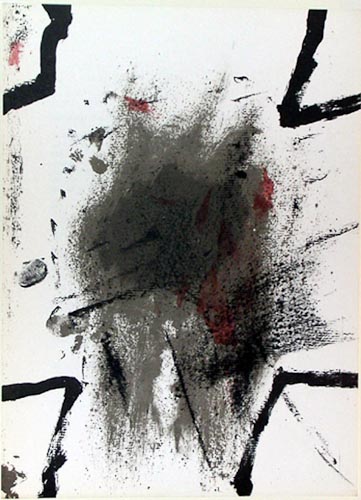
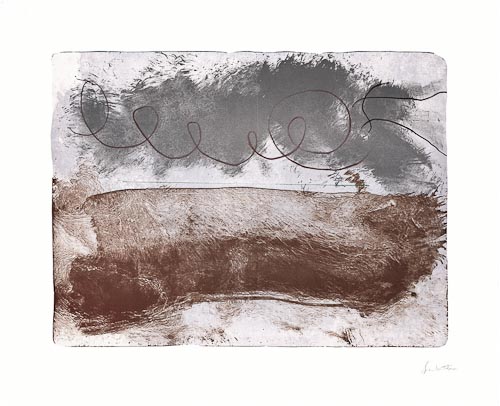
(Pic #2 ) Composition of Black, Gray and Reddish by Antoni Tapies, 1968.

I saw what could have been an acrylic abstract landscape  — a really interesting composition. (Pic #1)

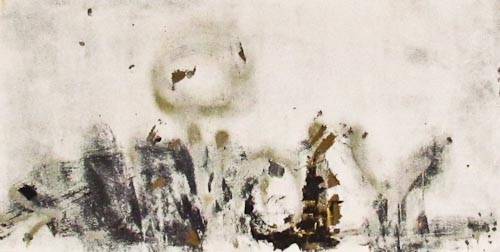
(Pic #3) "Vuillard's Chariot" Painting by Helen Frankenthaler 2006

It reminded me of the work of the late Spanish painter Antoni Tapies, (Pic #2) and the iconic American abstract expressionist, Helen Frankenthaler (Pic #3).

But the artist, in this case — was nature. Who knows how many rainstorms or snowfalls ravaged the roadside ad, and how many layers of paper and ink were left in their wake. I just like the idea that the elements become artists too, and we benefit from  their unpredictable, repetitive action.

(Pic #4) Deconstructing Signage


Filed Under: Found Art Tagged With: abandoned signage, Abstract art, art from disrepair, beauty in destruction, billboards, Finding art everywhere, Nashville, urban decay

The Art of Teaching Art

February 16, 2012 by Lonnie Lardner

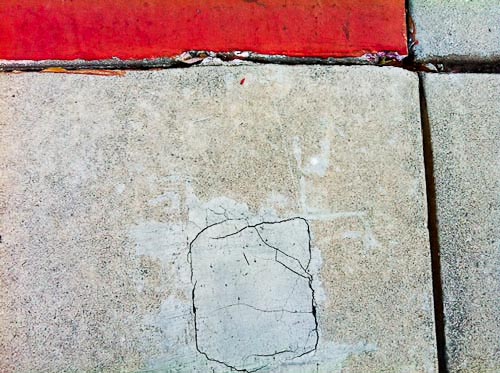
(Pic #1) My own "sidewalk show" found on the street in Calabasas, California

How my high school art teacher changed the way I view – everything.

I remember the day I understood what it meant to succeed at a task – specifically a school art project. It wasn’t the grade — nor the obligatory oohs and ahs from my parents — it had to be something I felt inside. I didn’t know this until I was 15 – when my 10th grade art teacher, “Mr. Printz” tossed out a question that made me cry.

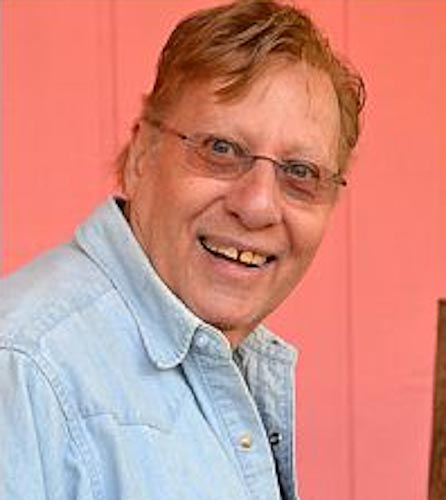
(Pic #2) Robert Printz, former Great Neck North High School Art Teacher

We were assigned a sculpture project, and I had chosen to make a plaster of paris oak tree in the middle of our living room in Great Neck, Long Island. I knew I needed something to hold the plaster onto the trunk, so I bought a roll of chicken wire and made what I thought was an adequate column, covered in traditional paper mache, and onto which I spackled the wet plaster.

Epic fail.

The plaster never dried, and by the time I had gotten the masterpiece to class, I had left a goopy white trail from my house through the halls of Great Neck North.  The project had become an oozing blob of white goo supported by a sickly crumpled wire foundation… resembling a little more of a Dr. Seuss character than I might have hoped.

I knew I had to submit the work, and had to speak about it.  I was paralyzed.  But Mr. Printz cut right through my consternation, and asked one thing:

“Lon, does this piece raise your blood pressure?”

At first I thought, well, yes, but only because I am completely humiliated.  I knew that wasn’t what he meant. He went on to explain that you know when a work is good when it sends you somewhere, speaks to you, makes you really feel something.

 I felt nothing.

Lesson learned: Appreciating a turn of phrase, a high note, a sidewalk show

From that day on, I have always tried to judge my work by this standard, and it has become a part of my psyche – an  internal mechanism of sorts — for appreciating and exploring art: in literature, in music, and on canvas.

It’s why I get so excited reading certain descriptions of nature in a Robert Frost poem, hearing the late jazz great Susannah McCorkle sing “Waters of March” or finding an unexpected artistic jolt on the sidewalk while I’m out for a jog. I’m now recognizing — and savoring — when I do feel my blood pressure rise.  It’s what’s supposed to happen when you do your best work, and appreciate the beauty of art around you.

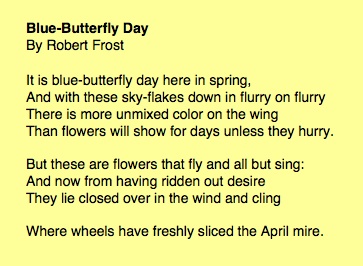
In describing blue butterflies, I love that Frost uses the phrase “flowers that fly.” (See poem above.) I still get misty when McCorkle slips into the Portuguese chorus, and just last week my blood steamed up when I saw this Mondrian-style cement block (Pic #1) on a sidewalk in Calabasas.

It’s a wonder I have time for anything else. Thank God for that, and for a sobering critique from Mr. Printz.

“Life is not measured by the breaths we take but by the moments that take our breath away.”

— Tina Adderholdt


Filed Under: Creative Zone Tagged With: art projects, feeling accomplished, knowing your best work, knowing your potential, life-lesson, observing art, Robert Frost, Robert Printz, self-criticism, Susannah McCorkle, teacher's influence

Today’s Pic: Stunning But Deadly

January 31, 2012 by Lonnie Lardner

Up close: Gorgeous hues and geometric lines of the Cold Spring Canyon “Suicide” Bridge – linking Santa Barbara with Santa Ynez.

Spectacular engineering feat still haunts locals.

“Jump up — not down!” screamed a dude in a pickup truck as we began to shoot a few photos of this magnificent scene. I should have known something was up. It only took a couple of casual chats with people along Stagecoach Road to figure out what it was.

Built in 1963, the Cold Spring Canyon Bridge embodies the perfect blend of strength and beauty. The 1200-foot crossing is by far the longest steel arch bridge in the state of California — a brightly colored architectural symbol of the Santa Ynez Valley.

But its history paints a darker picture — as 55 people have plunged to their deaths from the deck of its imposing span over a 420-foot canyon below. Eight lives lost in 2009, making it the most lethal year in the bridge’s history.

For years, residents have been calling it a “suicide hotspot” — many have been fighting for the installation of safety nets — though it has become a contentious legal battle in and out of court. But last week Caltrans announced it would begin installing grid mesh barriers on both sides of the historic structure; the project is expected to be completed this spring.

Bridge in the abstract: handsome contrast in color

Highway 154 (also known as The San Marcos Pass) is a sweet 33-mile ride through a portion of the Los Padres National Forest.

Arch bridges work by transferring the weight of the bridge and its load partially into a horizontal thrust restrained by the abutments at either side.

Photos  by Josh Kaplan.


Filed Under: Found Art Tagged With: arch bridge, Cold Spring Canyon bridge, photography, Santa Barbara, Santa Ynez, suicide bridge, what's this?

  • « Go to Previous Page
  • Page 1
  • Interim pages omitted …
  • Page 59
  • Page 60
  • Page 61
  • Page 62
  • Page 63
  • Interim pages omitted …
  • Page 85
  • Go to Next Page »

Subscribe here:

Categories

  • Art Table Tips
  • Artist Spotlight
  • Creative Zone
  • Eco-Art
  • Found Art
  • Newsmakers
  • Quotes
  • Reflections
  • Travel
  • Uncategorized

Archives

Hey Brubeck, Take THIS.

The Alien And The Volcano: Why Do Our Brains Need to Make Order Out of Chaos?

Wait — So How Do YOU Choose a restaurant?

Meet Creative Voltage!

Sometimes Your Cat Just Makes The Art FOR You

2026: Kicking Fear to the Curb

Choosing Gratitude. But for a paintbrush?

Every Page Is A Treasure: Discovering Plastikcomb

Calling all artists — INKTOBER is here! Whaaaaa?

Art From The Ashes

One Click — One Masterpiece?

When Art F*cks With Your Head

The Perfect One-Liner

Portland: A Tale Of One City – Through Two Lenses

Happy New Year!

Allowing The Moment To Emerge

How Can A 5-Year-Old Be My Muse?

Stunning, Simple Beauty

An Unexpected Collaboration With Nature

Pathetic Shoe Obsession: WTF?

Copyright © 2026 · Dynamik-Gen on Genesis Framework · WordPress · Log in