The Lardner Report

Unleash your creative superpowers!

  • Home
  • Creative Voltage Website
  • Contact
  • Archives
  • About

Today’s Pic: Stunning But Deadly

January 31, 2012 by Lonnie Lardner

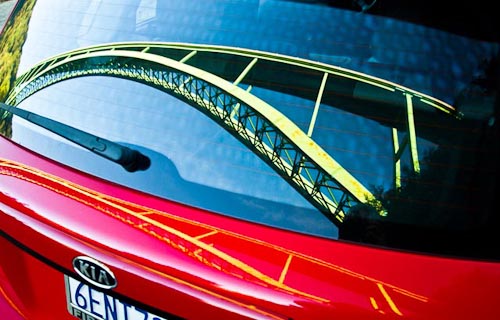
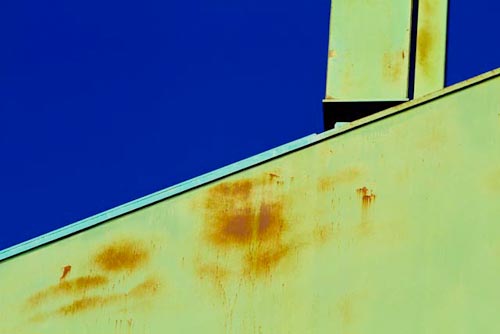
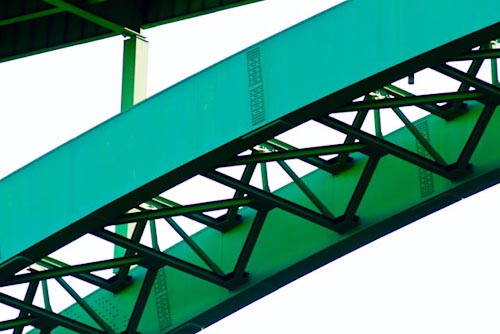
Up close: Gorgeous hues and geometric lines of the Cold Spring Canyon “Suicide” Bridge – linking Santa Barbara with Santa Ynez.

Spectacular engineering feat still haunts locals.

“Jump up — not down!” screamed a dude in a pickup truck as we began to shoot a few photos of this magnificent scene. I should have known something was up. It only took a couple of casual chats with people along Stagecoach Road to figure out what it was.

Built in 1963, the Cold Spring Canyon Bridge embodies the perfect blend of strength and beauty. The 1200-foot crossing is by far the longest steel arch bridge in the state of California — a brightly colored architectural symbol of the Santa Ynez Valley.

But its history paints a darker picture — as 55 people have plunged to their deaths from the deck of its imposing span over a 420-foot canyon below. Eight lives lost in 2009, making it the most lethal year in the bridge’s history.

For years, residents have been calling it a “suicide hotspot” — many have been fighting for the installation of safety nets — though it has become a contentious legal battle in and out of court. But last week Caltrans announced it would begin installing grid mesh barriers on both sides of the historic structure; the project is expected to be completed this spring.

Bridge in the abstract: handsome contrast in color

Highway 154 (also known as The San Marcos Pass) is a sweet 33-mile ride through a portion of the Los Padres National Forest.

Arch bridges work by transferring the weight of the bridge and its load partially into a horizontal thrust restrained by the abutments at either side.

Photos  by Josh Kaplan.


Filed Under: Found Art Tagged With: arch bridge, Cold Spring Canyon bridge, photography, Santa Barbara, Santa Ynez, suicide bridge, what's this?

The Art of the Haul

November 21, 2011 by Lonnie Lardner


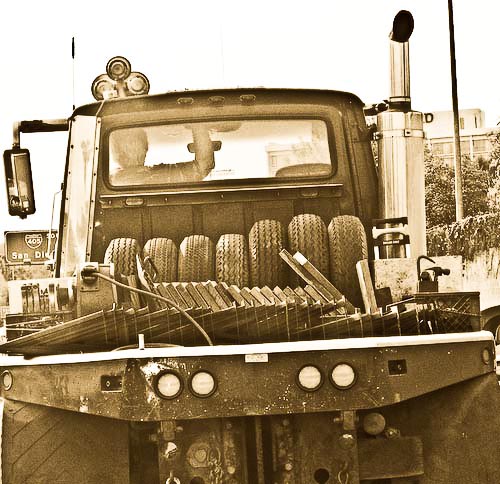
(Pic #1) Trucker hauling tires on the 405 in L.A. inspired this old-school sepia tone print.

Truckers in traffic: The art of abstraction is freeway close.

I guess you could call me obsessed. The Oxford dictionary says I would be labeled as such if I became “preoccupied with something… continually, intrusively, and to a troubling extent.” Guilty.

(Pic #2) Side of construction truck near Albany, NY

I can’t help it. I see 18-wheelers or old farm trucks and I’m sucked into a visual vortex: patterns of rusty holes, peeling paint, and flatbed piles worthy of a classic episode Sanford and Son. In these fleeting images I catch glimpses of stunning abstract art — some reminiscent of work shown in the world’s most prestigious contemporary collections and auction houses.

Finding the beauty:

In my corporate workshops I always stress the importance of really looking around us.  It’s become an annoying habit for anyone driving with me, because I’ve been known to engage in some light tailgating to get the shot I need. But if you make looking a habit, you will discover art in the most curious places. I happen to find expressways and side streets a great place to start. You’ll see quirky patterns and textures — and quite often, the making for a spectacular abstract-expressionist work of art.

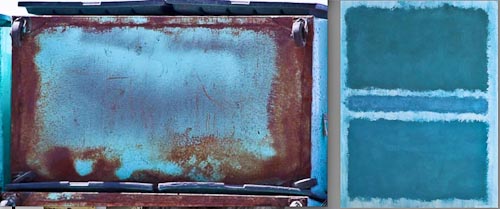
(Pic #3) Left: Junked boxcars, Saticoy, CA. Right: Rothko"Blue Divided by Blue" (untitled) which sold for $4.1 million U.S. Rothko 's record: over $72 million.

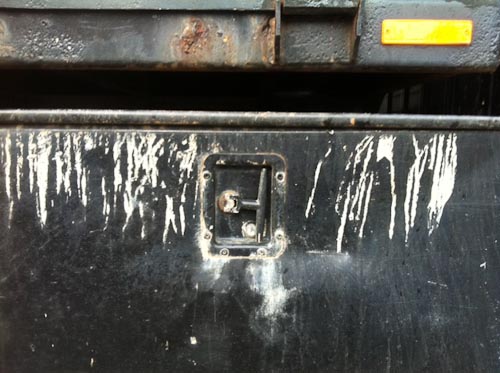
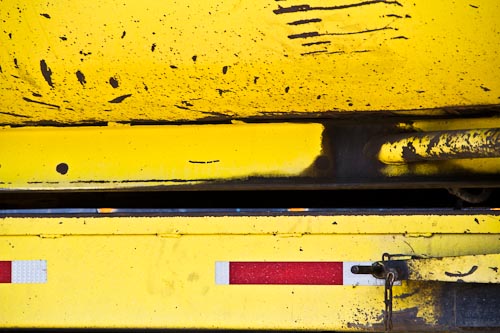
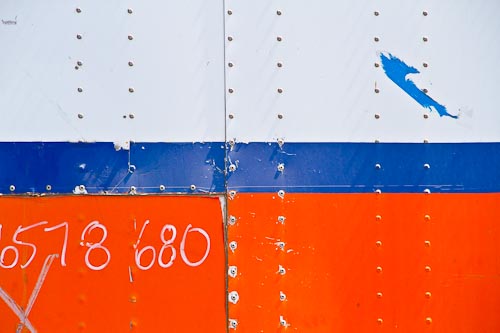
Two cases in point: On a recent visit to an automotive junkyard in Saticoy, accutane California, I encountered a graveyard for old trucks, trailers, and box cars. They were all piled high and strewn about. I was mesmerized by the geometry and contrast in color.  The delicate patinas of blues and browns reminded me of the work of iconic Russian-American painter Mark Rothko (Pic #3). Then — popping out from the mountains of metal — bold primary colors you might only see on race cars or lunch boxes. (Pic #4)

(Pic #4) (Detail) Side of trashed truck, Saticoy, CA

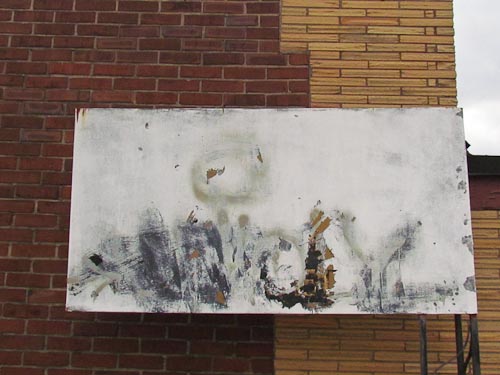
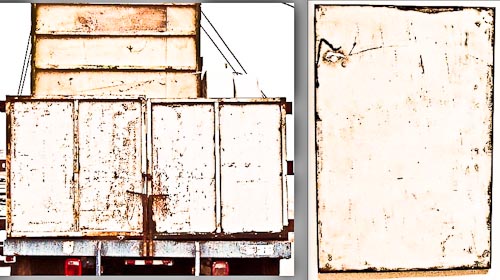
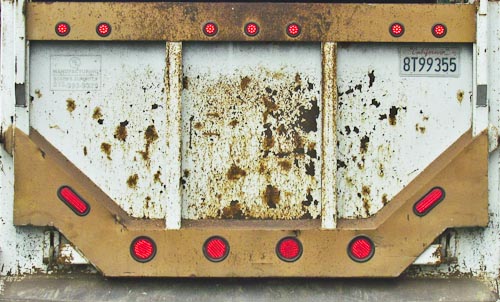
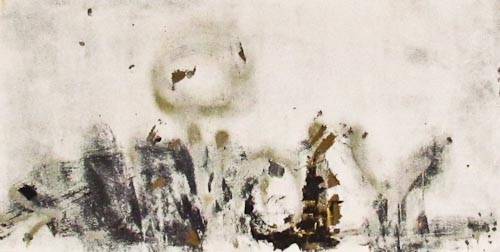
The same week I shot the back of a rusty white truck, I also encountered a chillingly similar painting in the Museum of Contemporary Art in LA that I had never noticed before (Pic # 5). The artist is a Spanish abstract painter named Antoni Tapies. The piece is called  “All White, Number 2”– painted in 1955. The truck image was captured on the 101, passing through the San Fernando Valley in 2011.

It doesn’t matter which came first– it does enrich us if we notice both.

(Pic #5) Left: White rusted moving truck, Los Angeles, 2011. Right: Mixed media on canvas painting by Antoni Tapies, 1955. Artist's work typically fetches hundreds of thousands to millions of U.S dollars.

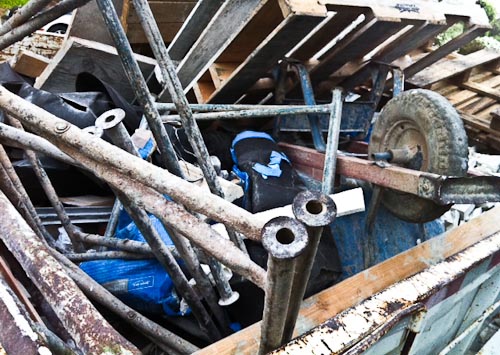
(Pic #6) Flatbed full of metal scrap, Los Angeles, CA

(Pic #7) Trashed truck, Saticoy, CA

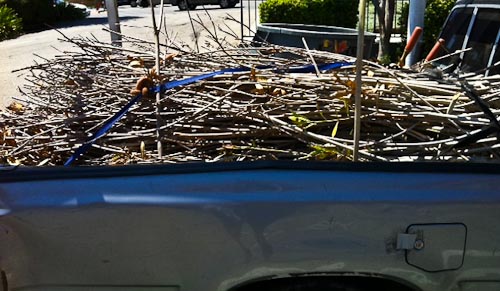
(Pic #8) Twig truck, Agoura Hills, CA

(Pic #9) Industrial "tagging," Los Angeles, CA

(Pic #10) Distressed beauty, Encino, CA


Filed Under: Found Art Tagged With: a trucker's canvas, abstract-expressionists, Antoni Tapies, art from scrap, finding art in traffic, freeway art, junkyard art, Mark Rothko, MOCA, patinas, seeing art everywhere, stimulating creativity

Farm Fresh Art

November 11, 2011 by Lonnie Lardner

(Pic #1) Metal frames for Oxnard "hoop houses" create sweet piles of voluptuous curves.

Discovering the fine lines and sensual shapes of agriculture

In my corporate workshops, I always encourage executives to take an alternate route to work — literally and metaphorically. The benefits from veering “off course” are staggering —  and they are anything but “off.”

It’s quite an imposing task to fight our nature — always seeking out the familiar — but once you break the habit, you’ll find you can’t stop exploring.  Taking that fresh path can fill your head with inspiring thoughts and images — which can later lead to quite a stream of useful ideas.

One of my favorite Southern California jaunts supplies me with an abundance of these little visual treats. On the way from Los Angeles to Santa Barbara, there’s a sweet series of agriculturally rich, freeway adjacent farmland, from Camarillo to Oxnard. Decades of tilling, harvesting, fertilizing and irrigating have left what I suspect are storied remnants of a struggling farming industry. I wallow in the bold, weathered, rust-covered shapes and structures that line these back roads.

Strawberries, raspberries, and  celery grow here. Locals take pride in their produce. But I just stop and stare at what the growing and picking seasons leave behind. Harvesters, tillers, dilapidated sheds… and in-your-face graffiti art that mocks or mirrors the landscape it treads. Next time you take the alternate route — don’t overlook the possibility that a roadside farm can be fertile ground for more than your recommended daily allowance of fresh fruit.

Photos by Josh Kaplan

Filed Under: Found Art Tagged With: art from agriculture, farm fresh art, finding beauty on the backroads, industrial art, Oxnard agriculture, roadside farms, rust, urban decay

  • « Go to Previous Page
  • Page 1
  • Interim pages omitted …
  • Page 15
  • Page 16
  • Page 17
  • Page 18
  • Page 19
  • Interim pages omitted …
  • Page 21
  • Go to Next Page »

Subscribe here:

Categories

  • Art Table Tips
  • Artist Spotlight
  • Creative Zone
  • Eco-Art
  • Found Art
  • Newsmakers
  • Quotes
  • Reflections
  • Travel
  • Uncategorized

Archives

Hey Brubeck, Take THIS.

The Alien And The Volcano: Why Do Our Brains Need to Make Order Out of Chaos?

Wait — So How Do YOU Choose a restaurant?

Meet Creative Voltage!

Sometimes Your Cat Just Makes The Art FOR You

2026: Kicking Fear to the Curb

Choosing Gratitude. But for a paintbrush?

Every Page Is A Treasure: Discovering Plastikcomb

Calling all artists — INKTOBER is here! Whaaaaa?

Art From The Ashes

One Click — One Masterpiece?

When Art F*cks With Your Head

The Perfect One-Liner

Portland: A Tale Of One City – Through Two Lenses

Happy New Year!

Allowing The Moment To Emerge

How Can A 5-Year-Old Be My Muse?

Stunning, Simple Beauty

An Unexpected Collaboration With Nature

Pathetic Shoe Obsession: WTF?

Copyright © 2026 · Dynamik-Gen on Genesis Framework · WordPress · Log in