The Lardner Report

Unleash your creative superpowers!

  • Home
  • Creative Voltage Website
  • Contact
  • Archives
  • About

Highest Grossing Photo Ever? What A Concept!

January 31, 2024 by Lonnie Lardner

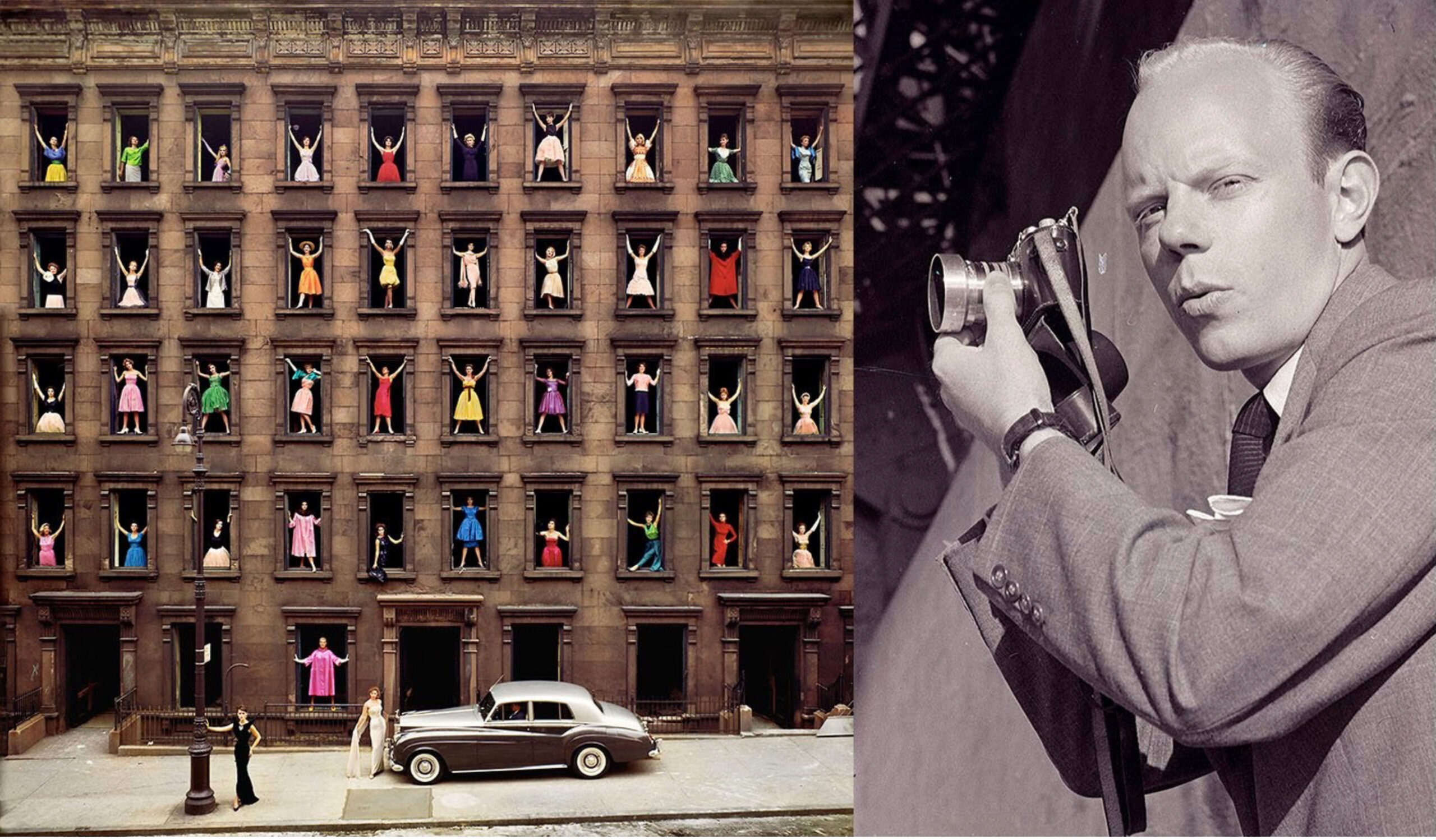
(Pic #1) Ormond Gigli and his historic “Girls in the Windows” photograph, 1960.

I don’t know how I missed this one, but I love the story behind it.

To me, this doll house looking photograph represents the best example of extraordinary conceptual art. And according to my husband (a super gifted photographer), there are two ways of looking at a subject. His way is to see something and document the moment.  Another artist — like Ormond Gigli — sees something and, aided by imagination, creates a fresh new world.

The photo above was shot on Manhattan’s upper east side in 1960.  It shows forty women posing in the window frames of a brownstone about to be demolished on toney East 58th Street.

So how is this picture considered conceptual art? According to the Tate Museum, “When an artist creates a conceptual form of art, it means that all of the planning and decisions are made beforehand and the execution is a perfunctory affair.”

The preparation and coordination that went into this image was staggering — and Gigli created it for himself without an assignment — just to remember a bygone era. It was a massive undertaking under crazy deadlines: the building was to be demolished in two days. Ormond needed to secure forty models in stylish colorful dresses, permission from the demolition crews, the repair of a huge hole in the sidewalk, and a deal for a loaner Rolls Royce to be parked out front.

The mastery — and the art —  emerges from the collaboration and cooperation with the city and the community. The relationship is not unlike the installation work of world famous artist Christo, who spent months befriending dairy farmers out west to gain support for his “Running Fences” project.  It was about the partnership first — outcome, second.

Meanwhile, many photography specialists in NYC agree that this photo is in fact the highest-grossing photo ever shot. But the intrigue doesn’t stop there. The story goes that the demolition supervisor said he would allow the shoot provided it included his wife in the photo: she stands on the third floor, third from left.  And Ormond’s wife poses on the second floor, far right, in pink.

Filed Under: Artist Spotlight, Creative Zone Tagged With: conceptual art, Conceptual photography, highest grossing photograph, installations, NYC photography, photographic techniques

Ai Weiwei Breaks Into Alcatraz

February 28, 2015 by Lonnie Lardner

IMG_2201

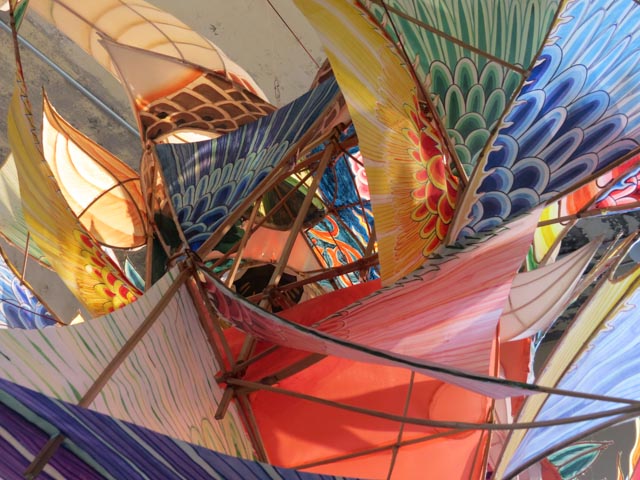
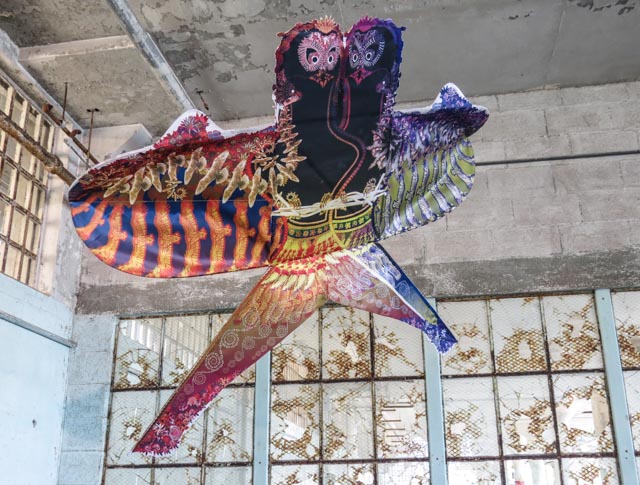
(Pic #1) Flying hand-painted silk sculpture by Ai Weiwei, installed where prisoners on “good behavior” found opportunity to work on Alcatraz.

The world famous Chinese artist-activist never set foot on the island, but his work now fills its storied halls.

IMG_2283

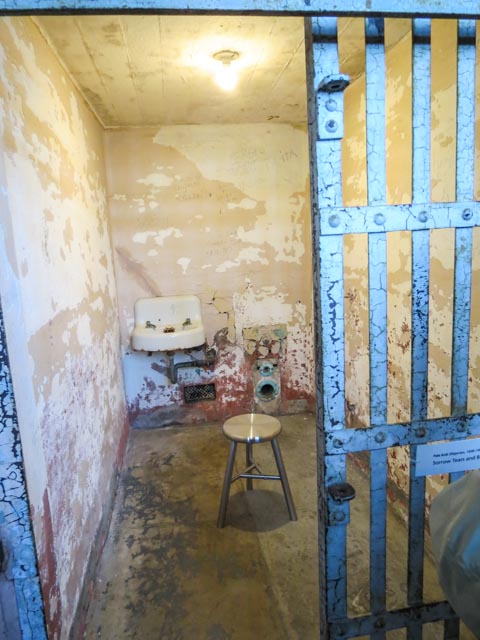
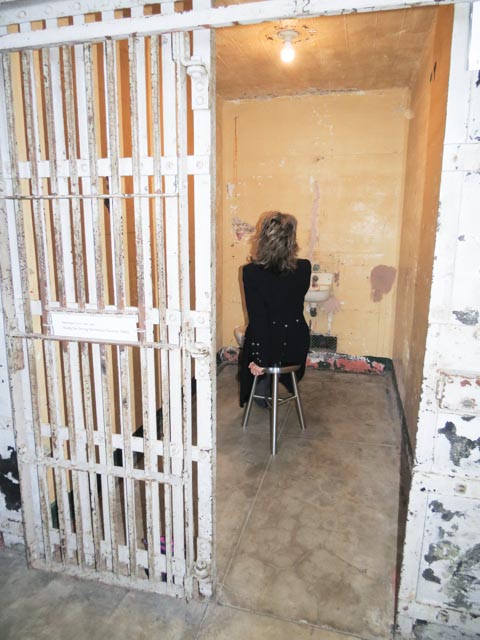
(Pic #2) Jail cell, bottom row.

Conceptual artist Ai Weiwei knows a little something about incarceration. In 2011, he was secretly detained “like a kidnapping” he said, when government agents intercepted him at the airport on his way to Hong Kong from Beijing. He recalls their pulling a black sheath over his head and shoving him into a car. He was ultimately released a few months later, but minus his passport.

Well, geography has not silenced Ai’s voice from being heard 6000 miles away. In fact, it could be argued that his message (exploring freedom of expression, confinement, and what it means to be a modern day political prisoner who fears his cause may have been forgotten) appears to be reaching record numbers of people. The exhibit, “@Large: Ai Weiwei on Alcatraz” has seen more than half a million visitors to date. Fans and tourists alike are making the trek hourly to “The Rock” on SRO shuttle boats.

According to Smithsonian magazine, When Ai was released from prison, Cheryl Haines, executive director of the For-Site Foundation (a San Francisco-based arts group specializing in large-scale works showcasing specific places) visited Ai in Beijing. Ai said he wanted “to address what happens when people lose the ability to communicate freely.” What if I brought you a prison?” she asked Ai. He nodded.

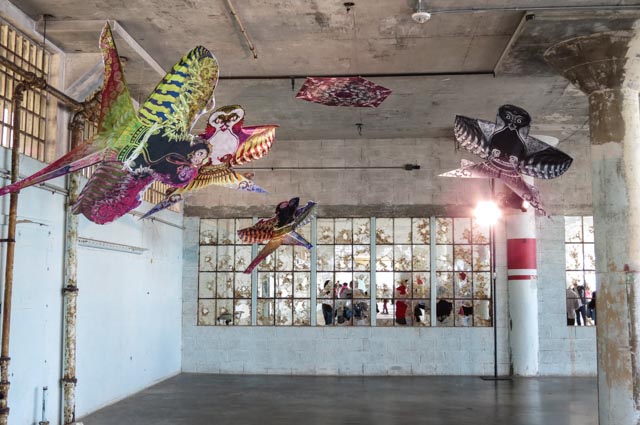
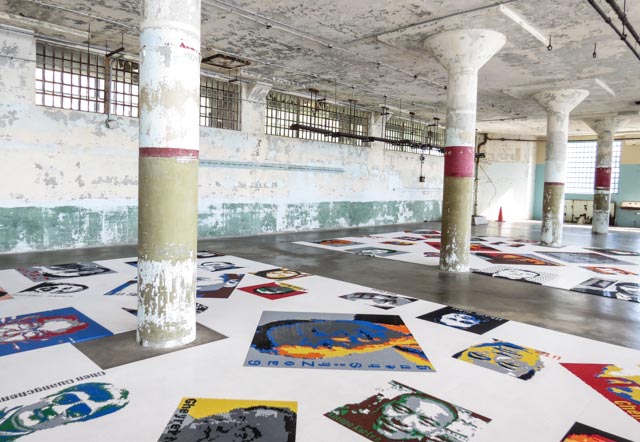
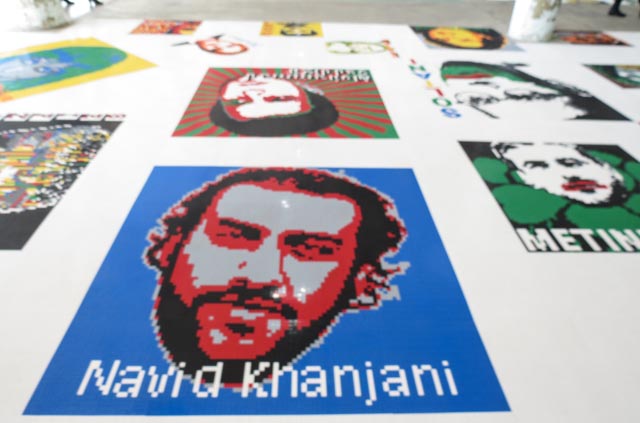
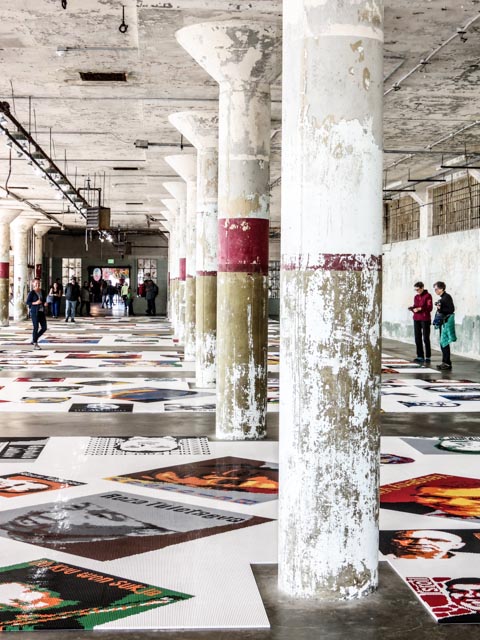
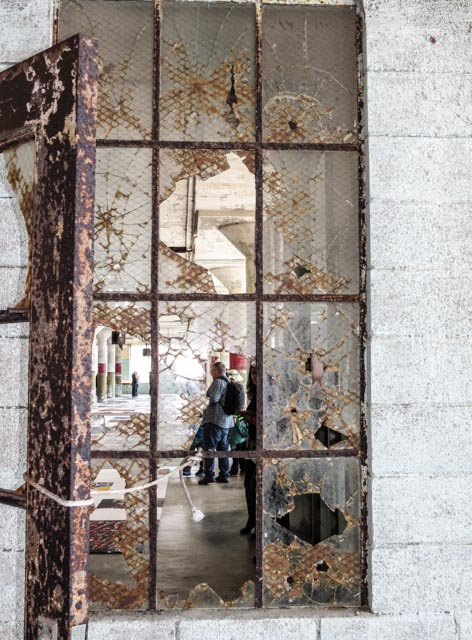
Ai Weiwei has covered a massive factory-like work room floor with portraits of famous and not-so-famous dissidents from dozens of countries. (Pics #8 , #9, #10, #11). All made from Lego blocks (sent over from China) assembled by hundreds of volunteers. Those portraits, and Ai’s mixed-media works are installed in the New Industries Building (where “privileged” inmates washed Army linens and fashioned rubber mats), the psychiatric ward of the prison hospital, (where Al Capone was treated for syphilis and dementia – Pic #2A), the 3-tiered A and B Block cells (known for their tool-proof steel bars – Pic #14), and the dining hall. Most of these locations are generally off-limits to the touring public.

IMG_2346

(Pic #2A) Artist installation in Alcatraz hospital ward – where Ai filled baths and sinks with white porcelain flowers.

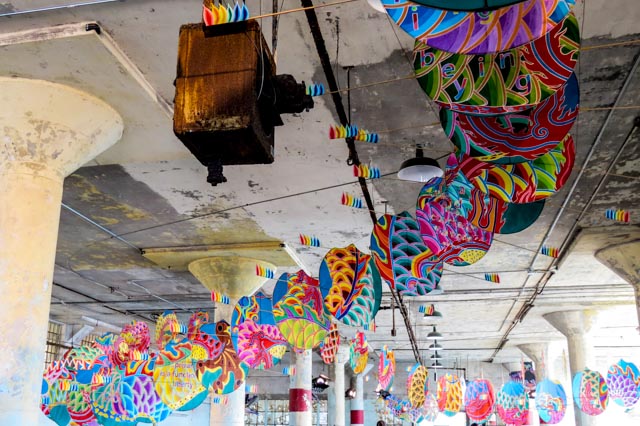
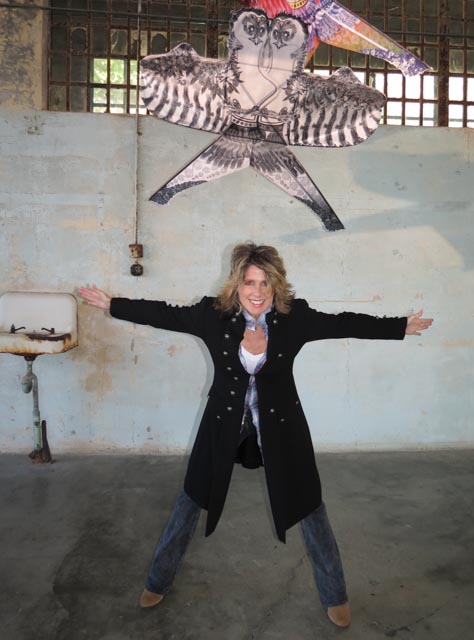
In the largest structure, Ai’s hand-painted rice paper, silk and bamboo “kites” fly overhead. (Pics #1,#3,#4, #5,#6,#7) They showcase designs based on the national birds or flowers of the prisoners’ respective countries —“fluttering likes scraps of hope.”

IMG_2315

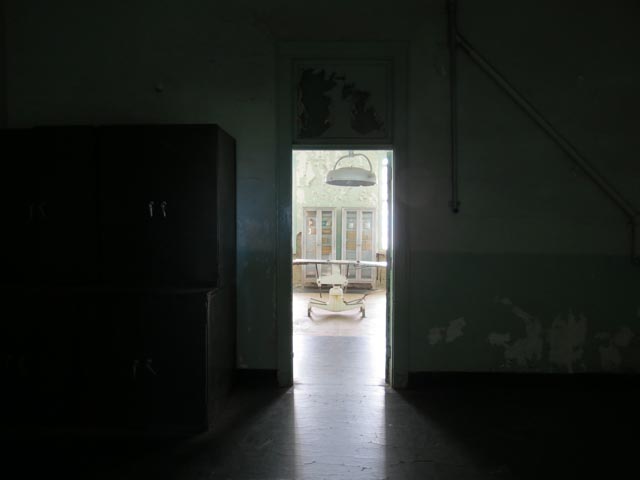
(Pic #2B)  Alcatraz Infirmary / psych ward

Ai spent three years constructing the infamous island prison in his mind at his studio in northern topamax Beijing. He pored over books and photographs of what used to be America’s foremost maximum-security penitentiary. Smithsonian says Ai “formed his own mental map” of the 5-foot by 9-foot cells, the austere prison hospital, primitive psych ward, as well as the inmates’ dreams of escape.

IMG_2209-2

(Pic # ) Detail, Painted Silk kite

The artist’s main ambition: to ensure that today’s prisoners of conscience around the world are remembered. Ai compiled a list of more than 175 of them and where they are being held in 30 different countries. “We looked at who is still in jail,” says Ai, “but may be already forgotten.” (Pics #8, #9)

Among the names are Sergei Udaltsov, a 37-year-old Russian critic of President Vladimir Putin, now under house arrest in Moscow; Ahmed Maher, a 34-year-old Egyptian activist sentenced to three years in prison in 2013 for protesting against the “limited” public demonstrations; Nguyen Van Hai, a 60-year-old Vietnamese blogger imprisoned for “disseminating anti-state information.”

You’ll need a full day to cover the entire show – allowing time to sit in a jail cell where chilling classical music is piped in, courtesy the artist.  (Pic #14). One such composition was written by Czech composer Pavel Haas, who was sent to a concentration camp in 1941; in 1944 he was transported to Auschwitz and killed. While he was imprisoned he wrote at least eight compositions, including the piece for string orchestra (now playing in Cell Block B.)  First performed by prisoners in Terezín, it is probably Haas’s best-known work today. Link to Audio here.

IMG_2352

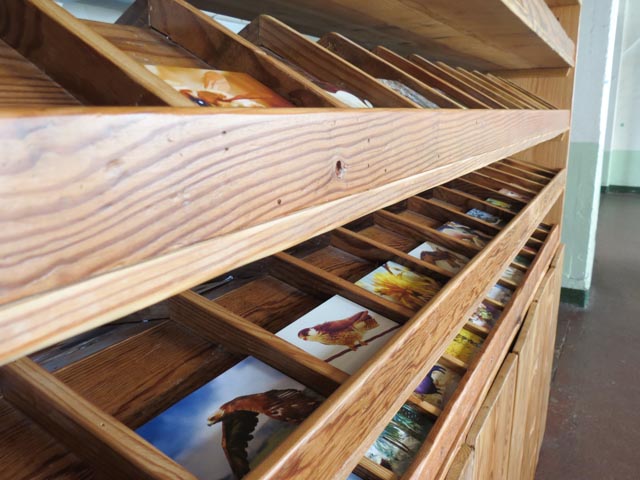
(Pic#10A) Pre-designed post cards addressed to dissidents; exhibit guests may write personal messages to them

The way cool interactive element to this tribute, is that visitors get to write personal messages on postcards to any of the 175 dissidents Ai references. He created art cards already addressed and stamped. 50,000 cards have been sent so far. (Pic #10A )

For a comprehensive look into the work and life of Ai Weiwei, click this link to Artsy.net.

Exhibit on view through 4.26.15.

IMG_2218

(Pic #3)

IMG_2207

(Pic #5)

IMG_2213-2

(Pic #6)

IMG_2216

(Pic #7)

IMG_2249

(Pic #8)

IMG_2247

(Pic #9)

IMG_2255

(Pic #10)


IMG_2222

(Pic #11)


IMG_2341

(Pic #12) Alcatraz hospital room where artist Ai Weiwei has filled sinks and commodes with miniature white porcelain flowers.

IMG_2340

(Pic #13) Alcatraz infirmary


IMG_2302

(Pic #14) A moment to listen and reflect, as Ai Weiwei creates cell block listening rooms.


IMG_2272

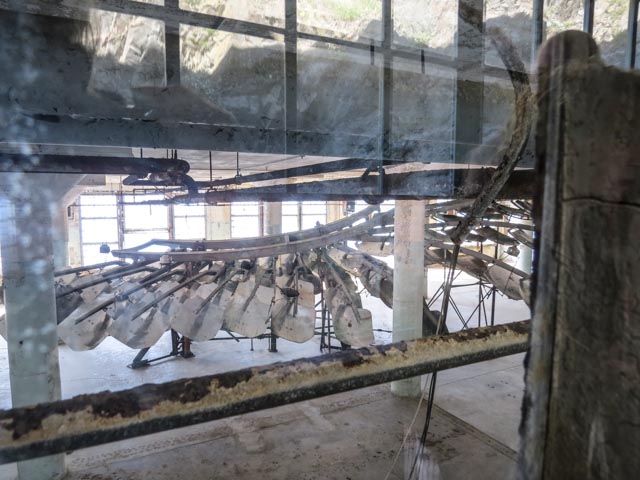
(Pic #15) Massive winged metal sculpture by Ai Weiwei in Alcatraz basement.

IMG_2277

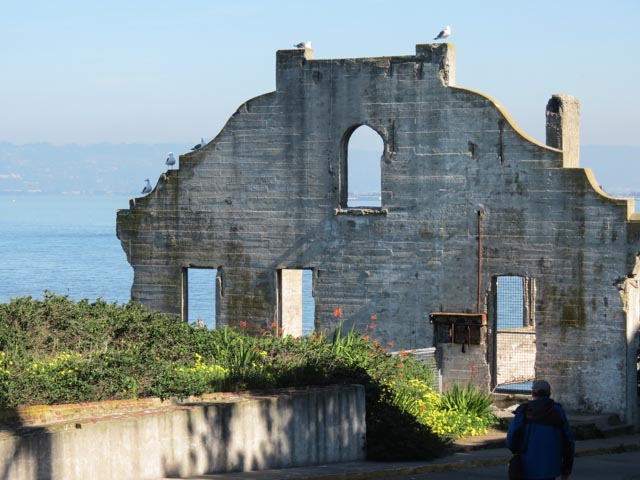
(Pic #16) Alcatraz building facade at port.

IMG_2280

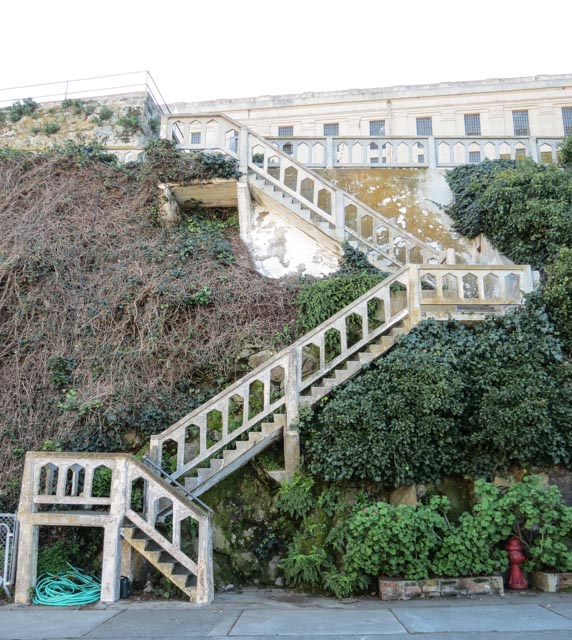
(Pic #17) Iconic prison staircase at port.


Filed Under: Newsmakers Tagged With: Ai Weiwei, Alcatraz art installation, Chinese activist, conceptual art, National Park Service, penitentiary art, political dissidents

Pipes, Pumps and Valves: The Art Of Modern Plumbing

October 31, 2014 by Lonnie Lardner

SB pipe-age 20141013-DSCF4318-edit copy

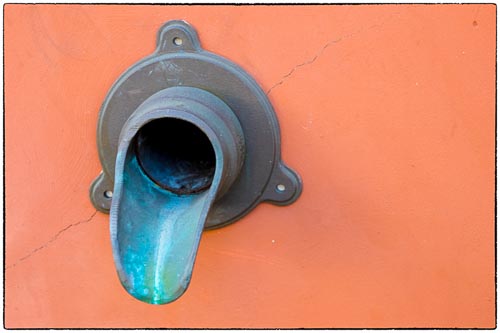
(Pic #1) Roof drain rain discharge line, Santa Barbara, California

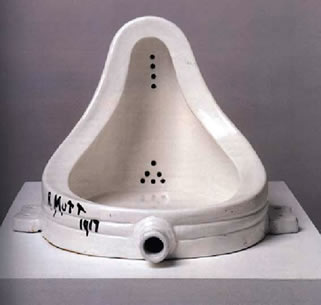
“The only works of art America has given are her plumbing and her bridges.”   — Marcel Duchamp  (1917)

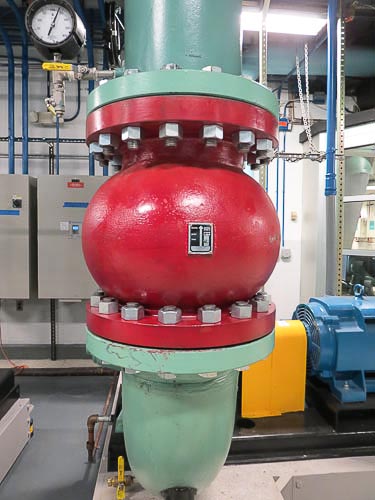
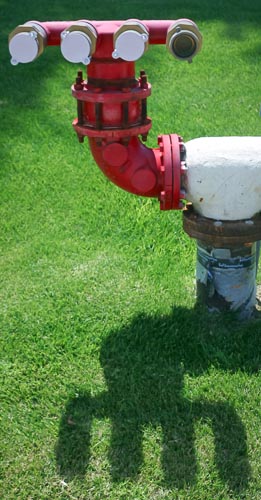
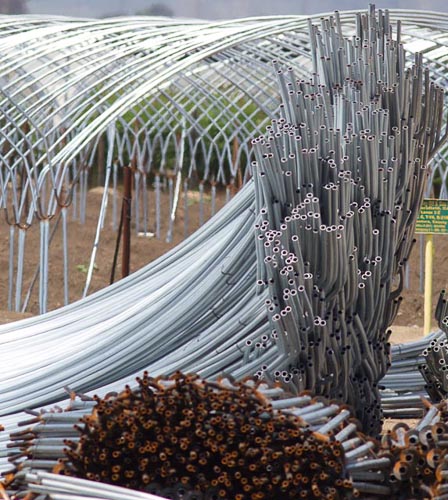
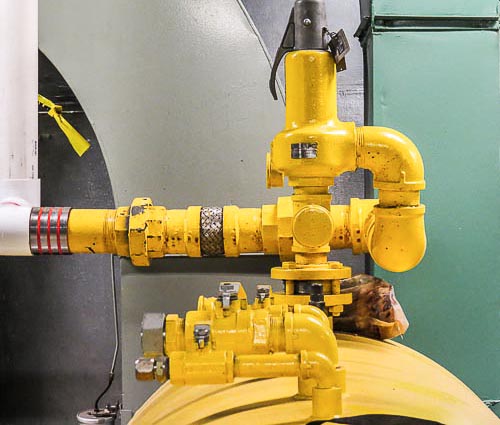
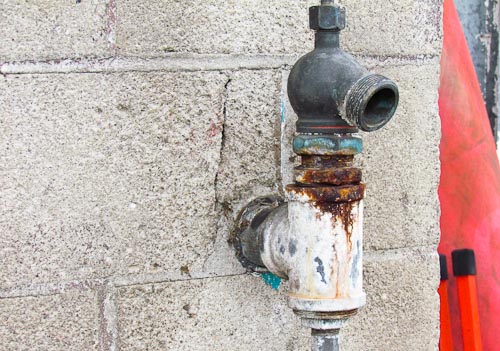
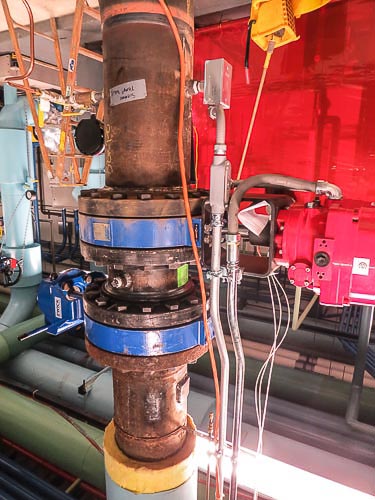
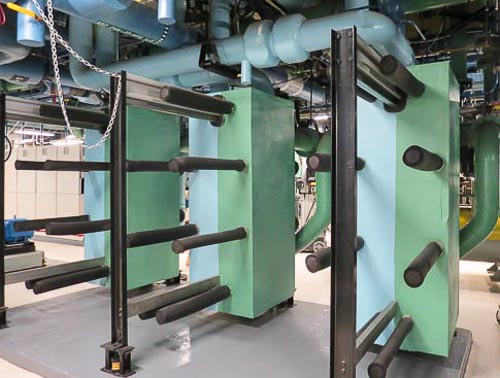
Lately, I’ve been obsessed with the colorful, clunky metal shapes decorating farm land in Camarillo, California. These forms also appear in basements, maintenance yards, and water treatment plants that no one notices. From Southern Cali to the bowels of turn-of-the-century skyscrapers in NYC, you can find the most elegant, gentle curves serving man’s plumbing needs. Pretty basic stuff. But they are both sculptural and beautiful.

duchampfountaincol-1

(Pic #2) “Fountain” by Marcel Duchamp (1917)

Perhaps the most famous plumbing fixture in history appeared on the American fine art scene in 1917 – when French conceptual artist Marcel Duchamp submitted a “readymade” porcelain urinal titled, “Fountain” to an exhibition that would ultimately reject the work. (Pic #2)

Duchamp dismissed the assumption that art must be linked to the “craft of the hand” and instead argued that a work of art should be primarily arthritis about the artist’s idea — a contention that became one of the most far-reaching principles of 20th century art.

To me, there is real beauty in these utilitarian objects. Check out the ones we’ve collected below. Heck, I even like the sound of the names assigned these sweet supplies, like: backflow preventers, hose bibs, swivel joints, valve actuators, flush valves, and discharge lines. TMI ?

round red pipe 4tlr I4tlr MG_1817 copy

(Pic#3) Detail, Industrial cooling system, Manhattan, NY

Google cooling room 4tlr  Taiwan CO6_1075 copy

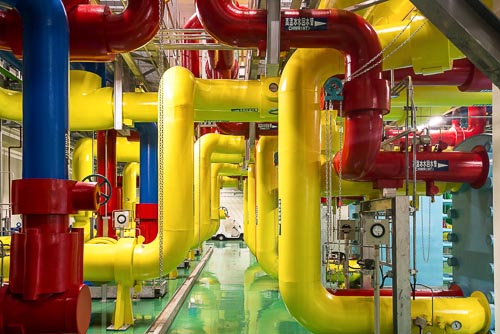
(Pic #4) Google’s Asian night time cooling and thermal energy storage system, Taiwan.

Alien pipe Fillmore CA Ilarge file MG_2555 4tlr copy 2

(Pic #5) Agricultural irrigation system, Fillmore, CA

Camarillo pipes wide copy.4tlr jpg copy 2

(Pic #6) Agricultural hoop house piping, Camarillo, CA

yellow twist pipe IMG_1837-2

(Pic #7) Detail, Industrial cooling system, Manhattan, NY

WEHO water pipe 4tlr copy

(Pic #8) A little rough around the edges -water spigot, West Hollywood

red pipe wires 4tlr MG_1835 copy

(Pic #9) Detail, Industrial cooling system, Manhattan, NY

Iblue greens cooling ny 4tlr MG_1844 copy

(Pic #10) Detail, Industrial cooling system, Manhattan, NY


Filed Under: Found Art Tagged With: beautiful curves, best art in USA, conceptual art, fixtures, idea as art, Marcel Duchamp, plumbing

  • « Go to Previous Page
  • Page 1
  • Page 2
  • Page 3
  • Go to Next Page »

Subscribe here:

Categories

  • Art Table Tips
  • Artist Spotlight
  • Creative Zone
  • Eco-Art
  • Found Art
  • Newsmakers
  • Quotes
  • Reflections
  • Travel
  • Uncategorized

Archives

Hey Brubeck, Take THIS.

The Alien And The Volcano: Why Do Our Brains Need to Make Order Out of Chaos?

Wait — So How Do YOU Choose a restaurant?

Meet Creative Voltage!

Sometimes Your Cat Just Makes The Art FOR You

2026: Kicking Fear to the Curb

Choosing Gratitude. But for a paintbrush?

Every Page Is A Treasure: Discovering Plastikcomb

Calling all artists — INKTOBER is here! Whaaaaa?

Art From The Ashes

One Click — One Masterpiece?

When Art F*cks With Your Head

The Perfect One-Liner

Portland: A Tale Of One City – Through Two Lenses

Happy New Year!

Allowing The Moment To Emerge

How Can A 5-Year-Old Be My Muse?

Stunning, Simple Beauty

An Unexpected Collaboration With Nature

Pathetic Shoe Obsession: WTF?

Copyright © 2026 · Dynamik-Gen on Genesis Framework · WordPress · Log in