The Lardner Report

Unleash your creative superpowers!

  • Home
  • Creative Voltage Website
  • Contact
  • Archives
  • About

The Secret to Finding Pure Joy: Think Like A Dog

August 29, 2011 by Lonnie Lardner

“Most men pursue pleasure with such breathless haste, they hurry past it.”        — Kierkegaard

It seems so simple. Finding and expressing pure joy should be one of our most natural, instinctive qualities. But sometimes we just get in the way -– completely disconnecting from our child within — losing the moments that really matter.  Maybe animals know something we don’t. I’ve always speculated that they are way more evolved than we are – after all, when they trip over something, they don’t have to look back and find something to blame for the fall.

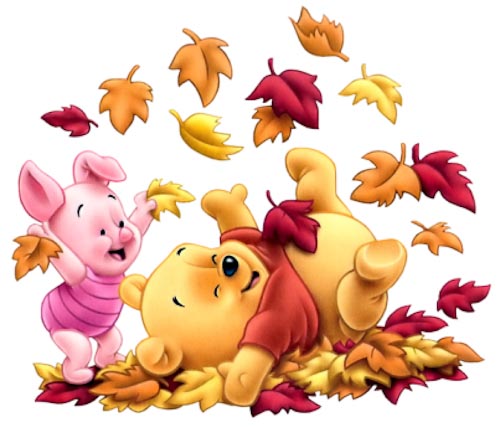
A.A. Milne was able to capture the bliss attached to simple pleasures through the eyes of Piglet and Pooh:

 “When you wake up in the morning, Pooh,” said Piglet at last, “what’s the first thing you say to yourself?”

 “What’s for breakfast?” said Pooh. “What do you say, Piglet?”

  “I say, I wonder what’s going to happen exciting today?” said Piglet. 

   Pooh nodded thoughtfully.

  “It’s the same thing,” he said.

Now, Seattle’s most celebrated photographer/artist, Robin Layton comes on the scene with a fresh, deeply intuitive take on doggie delight. The video above  — profiling a day in the life of her adopted dog “Monkey” — was shot to remind us of the benefits of rescue pets. But for me, it is a reminder of what I might miss every day, if I don’t jump out of bed and look for the ball.

Filed Under: Creative Zone Tagged With: dog video, doggie delight, expressing joy, finding pure joy, inspiration from our pets, learning from our pets, rescue pets, Robin Layton, shelter dogs, Winnie the Pooh

Getting “Unstuck” — Four West Coast Artists Tell Us What It Takes

August 23, 2011 by Lonnie Lardner

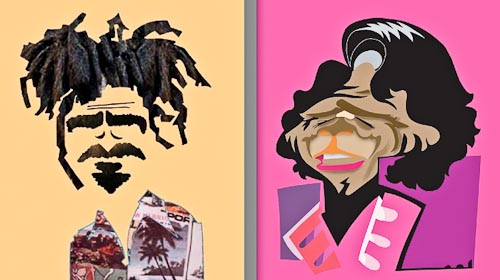
(Pic #1)  Left: Adam Duritz, vocalist, Counting Crows — illustration by San Diego artist Beau Hufford. Right: R ‘n’ B icon James Brown, portrait by Beau Hufford.

Even the most accomplished artists will tell you – at any given moment — their creative flow can suddenly come to a paralyzing halt. Usually the best talents manage to navigate the choppy waters and find a way to emerge from the work-stopping struggle. We asked four successful contemporary artists from disparate disciplines to tell us where they go to “get unstuck.” Meet an architect, a sculptor, musical composer and a caricaturist who agreed to address the following:

Question: Whenever you feel creatively “stuck,” do you have a kick-ass way to break through the block?

Beau Hufford:  Caricaturist, San Diego, California (Pic #1)

Answer: “The worst thing I can do for myself is to force work out.  Deadlines exist.  Time exists.  I get it.  But ultimately I have found that I have to be unproductive until I am productive.  This definition does not equal being lazy or saying f**k it to the work.

It simply says that in order to really let your ideas flow, you have to take a walk, play a game, shoot a gun, have sex, eat a muffin or involve yourself in any number of distractions that exist in your world.  The goal is always on the edge of my awareness but realizing what I control and more importantly what I can’t control really helps me find the best stuff I have ever thought of.   The short answer to this question is:  have sex.”  Click here for Beau’s website.

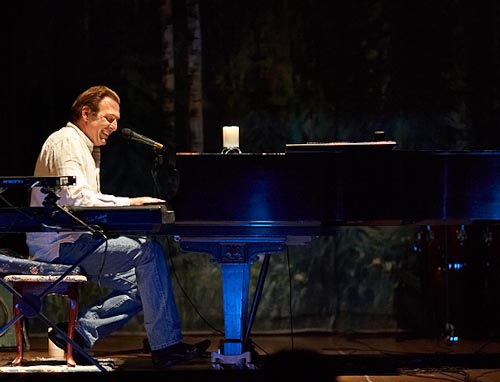
(Pic #2) Composer John Sokoloff on stage

John Sokoloff: Composer, Los Angeles, California (Pic #2)

Answer:  “When (iconic Irish rocker) Bono was asked “What if you have nothing to write about?” He answered, “I write about nothing.”

We are never in a complete vacuum.  There is always something to catalyze creativity.  If I have nothing and get angry because of it — I will then write about anger.  The key is to not pre-judge one’s art.  This is what most often stifles creativity for me. Expectations. Remember, it’s inside out — not outside in.  Do not allow preconceptions (self-imposed or by others) to limit your spectrum.

Metaphors catalyze my music.  Sports, as one good example.  Every great athlete is an artist. Watching a Wayne Gretzky, Michael Jordan or a Magic Johnson in their day was experiencing ventolin music.  Every athlete has a moment of time to fill with creativity. Think a measure of music. A boxer can fill this time with 2 left jabs and a right cross. (In musical terms that is two 1/8 notes and a half note).  A hockey player is going down the middle of the ice — he can pass to the left, or to the right — or drop the puck back at reduced pace. The great ones will do the unexpected. This is creativity exemplified.

In sports, as in music,  patterns develop early in an event. A boxer will feed his opponent a certain pattern of punches for the early rounds and then change it up by faking and deviating from the expected pattern.  (Like we do in blues — develop a pattern which the audience depends on — then put a pause  in certain key areas to give a sensation of expectation abruptly changed.) The road not taken — taken. This allows for the tension, build up and release that makes music such a magical, visceral experience.”  John’s website: http://johnsokoloff.net

Flora Kao: Sculptor, Los Angeles, California (Pic #3)

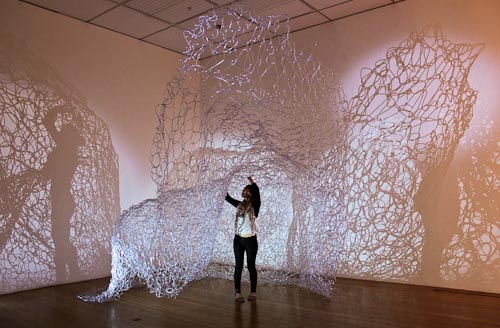
(Pic #3) Installation, “Shroud” Vinyl tubing and video projection, 14′ x 14′ x 14.’ ‘By Flora Kao.

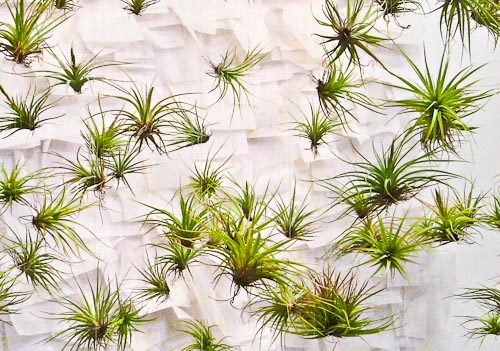
(Pic #4) “Drift” air plants installation by Flora Kao.

Answer: “I take a stroll through the aisles of Home Depot where I can examine the huge range of materials available for art making … that’s where I found my air plants (See Pic #4).

I catch up on as many museum and gallery shows as humanly possible to savor the great range of creative gestures out there and relish LA’s vibrant arts community…

I take a break with the visual feasts of Huntington and Descanso Gardens…  and add a healthy mix of freedom, deadlines, and rules to break.”

Flora’s website: http://floratkao.blogspot.com

Robert Carpenter: Architect, Los Angeles, California (Pic #5)

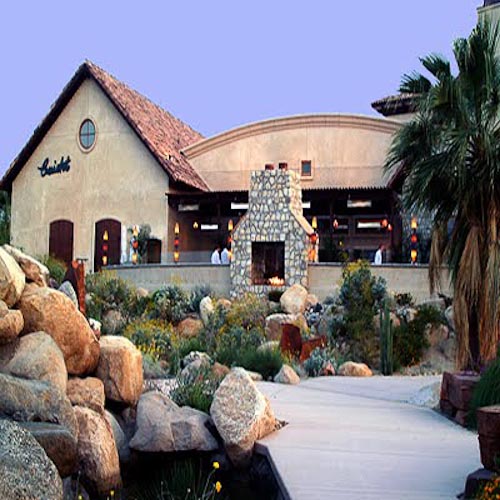
(Pic #5) Restaurant “Cuistot” in Palm Desert, California. Designed by architect Robert Carpenter.

Answer: “I’m a bath taker…getting stuck during design gets an E-Ticket straight to the tub. Super hot soakings release the bad mojo and brew the senses. When the creative juices are warmed and ready, sketches on the foggy glass enclosure translate to the ideas that bring satisfying completion.

My perfect space for stimulating creativity is an environment with music, light, and all supplies nearby. Whenever possible–outdoors.”

Read an in-depth profile on Robert’s work here.

Filed Under: Creative Zone Tagged With: architecture, art, artists' block, Beau Hufford, Bono, caricature, creatively stuck, Cuistot, Flora Kao, getting creative, Gretzky, installations, John Sokoloff, Jordan, metaphors, music, Robert Carpenter, sculpture, secrets to ceativity, sports, stimulating creativity

Handwriting: A Lost Art — Found Again

August 14, 2011 by Lonnie Lardner

(Pic #1) “To-do” list with illustrations by artist Janice Lowry, 2003

Morgan Library showcases the beauty — and intimacy — of artist “LISTS.”

If you’re Generation Y, or in the latest group of tech-savvy kids who don’t remember life before texting, my hunch is good penmanship is not on your BFF list. In fact, TIME Magazine posits “we are witnessing the death of handwriting.”

According to an NPR survey, More than 8 in 10 Americans under age 60 currently use a computer at home or work. Most Americans say technology has significantly improved their lives, and they are demonstrating their enthusiasm through purchase power.

What does this mean? According to Steve Graham, a special-education and literacy professor at Vanderbilt University, the simple fact is — “Handwriting is just not part of the national agenda anymore.” As I see it, now the only professionals who consistently use handwriting in their work are doctors — and they suck at it.

But when you see The Morgan’s exhibition (from the Smithsonian’s Archives of American Art) you can’t help but be charmed by the personal, handwritten thoughts, inventories, and scribblings of some of the world’s most accomplished artists and writers of the last two centuries. And if you’re like me, you wonder if this personal method of record-keeping, list-making, and journaling will be lost — to endless pages of plebian helvetica medium font — forever.

(Pic #2) Picasso’s list of recommended artists 1912

There’s something so intimate about seeing Picasso scratch out Marcel Duchamp’s name phonetically, (Pic #2) as he informally lists European artists he recommends for the 1913 Armory Show (including Gris and Leger) — the first international exhibition of Modern art in the United States. And of course it was Duchamp’s “Nude Descending a Staircase” that took the art world by surprise that year.

Assemblage artist Janice Lowry kept a journal for nearly forty years that filled 126 bound volumes. (Pic #1)  Peppered adhd with to-dos —“make plane reservation…. skin appointment,” and “get rain gutters” — she also weaves in dreams and random thoughts — each page thick with collaged images, paint, stamps, and stickers.

(Pic #3) Eero Saarinen lists his love’s “good qualities” 1954


Architect Eero Saarinen’s “list of good qualities” — written in all caps — for Aline Bernstein,  the woman who would become his second wife — shows a certain vulnerability, as he notes on the bottom, “I know this is not a good sentence.” (Pic #3)

In the sketchbook of Adolf Konrad, (Pic #4) we find an illustrated list of things the artist needed to pack for his trip to Rome and Egypt in 1962 — and on one page, he included a drawing of himself wearing nothing but his underwear.

(Pic #4) Adolf Konrad’s “packing list” 1963

Mobile sculptor Alexander Calder’s handmade address book, circa 1930, casually lists the street addresses for iconic figures like Constantin Brancusi, Hans Arp, and other members of the Parisian avant-garde. (Pic #5)

(Pic #5) Calder’s avant-garde 411

The exhibit, at The Morgan Library and Museum in midtown New York, also features notes from Lee Krasner, Elaine de Kooning, Grant Wood, and H.L Mencken. The experience sent me back to the first time I ever saw Henri Rousseau’s “The Dream” at MOMA. I stood there aghast, staring, in awe that I could finally see the original work I had admired since I was 10. Reproductions did not do it justice.

There’s something so human — so connective — about seeing evidence of an artist’s personal touch — right there on the paper or canvas in front of you. Graphologists will tell you handwriting can define a personality or reveal one’s true self-image. “LISTS” provides us with one more tool with which we can explore some of the art world’s most creative minds.

“LISTS” runs through October 2nd.


Filed Under: Newsmakers Tagged With: Adolf Konrad, Alexander Calder, Duchamp, Eero Saarinen, handwriting, Janice Lowry, lists, Morgan Library, penmanship, Picasso notes, printed vs: handwritten, the death of handwriting

  • « Go to Previous Page
  • Page 1
  • Interim pages omitted …
  • Page 65
  • Page 66
  • Page 67
  • Page 68
  • Page 69
  • Interim pages omitted …
  • Page 85
  • Go to Next Page »

Subscribe here:

Categories

  • Art Table Tips
  • Artist Spotlight
  • Creative Zone
  • Eco-Art
  • Found Art
  • Newsmakers
  • Quotes
  • Reflections
  • Travel
  • Uncategorized

Archives

Hey Brubeck, Take THIS.

The Alien And The Volcano: Why Do Our Brains Need to Make Order Out of Chaos?

Wait — So How Do YOU Choose a restaurant?

Meet Creative Voltage!

Sometimes Your Cat Just Makes The Art FOR You

2026: Kicking Fear to the Curb

Choosing Gratitude. But for a paintbrush?

Every Page Is A Treasure: Discovering Plastikcomb

Calling all artists — INKTOBER is here! Whaaaaa?

Art From The Ashes

One Click — One Masterpiece?

When Art F*cks With Your Head

The Perfect One-Liner

Portland: A Tale Of One City – Through Two Lenses

Happy New Year!

Allowing The Moment To Emerge

How Can A 5-Year-Old Be My Muse?

Stunning, Simple Beauty

An Unexpected Collaboration With Nature

Pathetic Shoe Obsession: WTF?

Copyright © 2026 · Dynamik-Gen on Genesis Framework · WordPress · Log in