The Lardner Report

Unleash your creative superpowers!

  • Home
  • Creative Voltage Website
  • Contact
  • Archives
  • About

Leafy Sea Dragons: Nature’s Perfect WTF

September 16, 2011 by Lonnie Lardner

(Pic #1) Leafy Sea Dragon, Nat Geo Photo by Laurent Ballesta

Seriously though — Plant or fish?

In case you’ve missed their appearances in recent documentaries and photo collections, these spectacular sea creatures mostly decorate the undersea forests on the southern and western coasts of Australia.  There’s a sort of medieval vibe to them and a charm I find worthy of  adulation. With their flowing crepe-like appendages, it’s as if they’re dressing up for a late show at the Folies Bergere. These fancy protrusions serve as protective camouflage, so predators don’t find them amidst the seaweed on the ocean floor.

These “leafies” as they are commonly called, are in fact categorized in the family Syngnathidae, which also includes seahorses. They each have a long, pipe-like snout that they use to feed. They consume plankton and small crustaceans, and grow to measure about 8 – 10 inches long.

Seriously though — Mommy or Daddy?

Yes, it’s true. After a courting dance that can last up to several weeks at a time, it’s the male that will levitra eventually fall pregnant once the female has deposited  hundreds of eggs onto his tail. For the next 5-6 weeks, the father will spend his time buried deep in the ocean’s thick kelp meadows to doggedly protect his young from predators. Eventually Dad will give birth and the eggs will drop.

To me, these wondrous creatures are the ocean’s own found art. Maybe, more accurately, they are performance artists. As you will see in the video clip below, two small fins gently propel sea dragons through the water as if they are floating weeds. It’s quite miraculous to watch their fragile forms glide so gracefully and blend in so seamlessly with what surrounds them. While they are not considered endangered, they are threatened by pollution and industrial runoff. The good news is this: Sea dragons are protected under Australian law, and their export is strictly regulated.


You can download a high resolution National Geographic photo of the Leafy Sea Dragon for your desktop wallpaper here. “The Vanishing Dragon” documentary may be purchased here.

Filed Under: Found Art Tagged With: father fish gives birth, fish, Laurent Ballesta, leafy sea dragons, mystery of the sea, National Geographic wonders, nature's mysteries, underwater camouflage

Twin Towers: The Artist’s View

September 12, 2011 by Lonnie Lardner

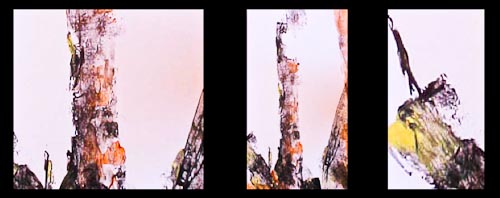
(Pic #1)  “Sept 11” mixed media on paper, by “Shara”

Images bombard our brains by the thousands every day – and it seems lately, it’s an all-day thing. Some take our breath away, and stay with us for years – i.e., the picture known as “the falling man” from 9/11,  the stunning green-eyed Afgani refugee on the cover of Nat Geo, or the chilling shot of the naked 9-year-old girl fleeing chaos on the streets of Vietnam. Sometimes they hurt so much, we have to stop looking. Other times they become  transformative life experiences and opportunities to learn and grow.

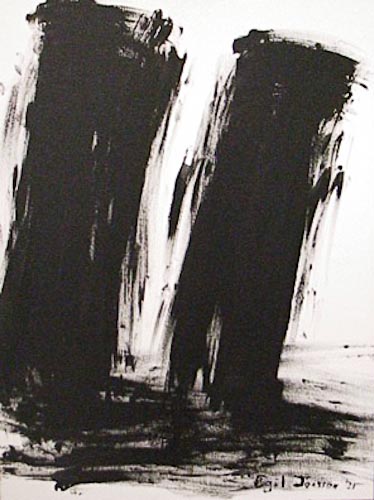
(Pic #2) "Grief #1" by Egil Jonsson - acrylic on paper. One of 15 images in the series, "Executed in a violent fit of rage on the evening of September 11."

But one thing is clear: Photographers —  in fact artists in general — will almost always present one of these three things to our consciousness:

a) a subtle way to soften bad news with a sense of goodness and beauty

b) a sobering, fresh perspective  exposing truths we may have missed

c)  a clearer sense of our anger, a reason for protest, or how much we hurt

It’s as if artists possess a magic potion that can alter our perceptions. Artists can tackle a subject, paxil then trash and torture it until it is barely recognizable, knowing all the while that we the viewers cling to the familiar. It is an artist’s job to challenge those comfortable positions. It’s what makes great art great.

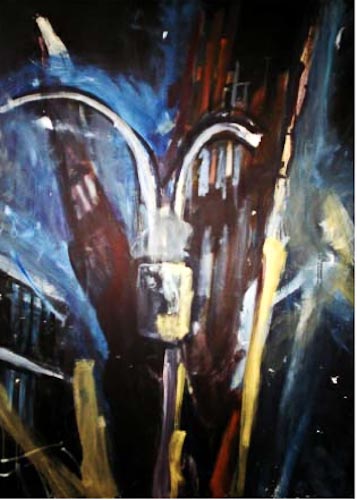
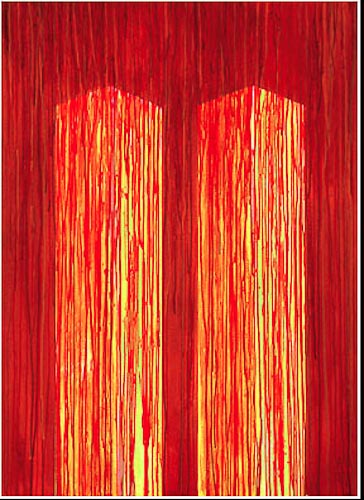
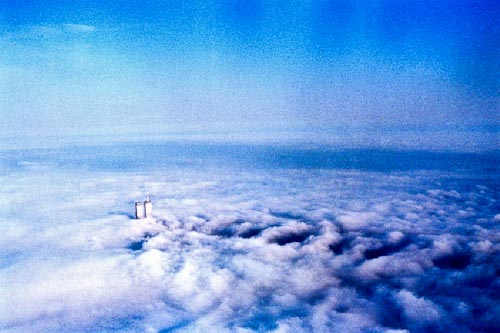
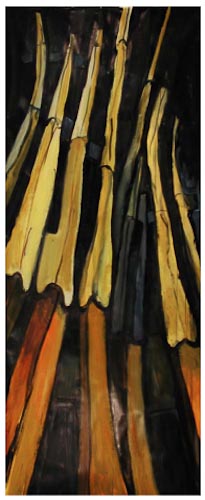
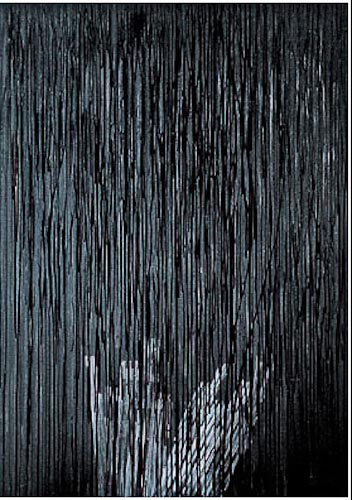
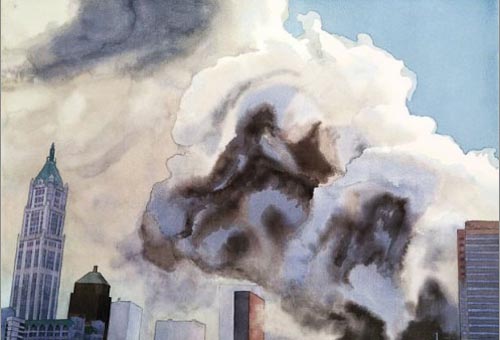
Check out the images on this page. They are all interpretations of the same architectural structures: the two World Trade Center towers—before, during, and after that dreadful day.

(Pic #3) "Wings" Acrylic on canvas. By Anthony Graviano, 2001

(Pic # 4) "Horror and Pain" Acrylic on canvas, by Bodo Gsedl

(Pic #5) Twin Towers, Spring of 2001. 35mm Photograph by Katie Day Weisberger, NY Times

(Pic #6) "Tower #2" Acrylic on paper, by Anthony Graviano, 2001

(Pic #7) "Death and Grief" by Bodo Gsedl, acrylic on wood, 2001

(Pic #8) "City of Ruins" Painting by Todd Stone, 2001

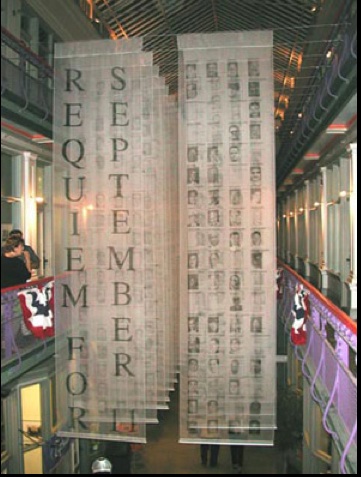
(Pic #9) "Requiem for September 11th" by Tatana Kellner. Silkscreen of Portrait of Grief Pages from the New York Times, 2001

Artist links: Antony Graviano —  click here.  Egil Jonsson — contact here.  Bodo Gsedl — click here. Todd Stone — click here. Tatana Kellner — click here. Katie Day Weisberger — click here.

Filed Under: Newsmakers Tagged With: 9/11 art, Anthony Graviano, art from the ashes, art news, Bodo Gsedl, Egil Jonsson, fresh eyes, Shara, Tatana Kellner, Todd Stone, twin towers

Art Imitates Junk

August 31, 2011 by Lonnie Lardner

Left: (Pic #1a) Close-up, distressed trash bin. Right: (Pic #1b) Original hand-crafted glassware by Dale Chihuly

Finding art in the strangest places

You’d think my GPS would know by now. Most of my unannounced stops can’t be programmed in. They’re not even on the map. My greatest joy is to veer off the freeway toward the parts of town most people blitz past:  salvage yards, construction sites, or industrial plants. To me they represent a treasure trove of sweet images and exciting visual possibilities.  The dirtier, the better.

Last week on a little photo safari with my husband, we veered off Highway 126 in Saticoy, migraine California — 50 miles northwest of Los Angeles  — and bumped head on into an extraordinary municipal dump.

I spotted a worn, scratched, large red trash bin and grabbed a shot. (Pic #2) From a distance it appeared to just be a well-used metal waste container with no other particular value. But close-up, it emerged into a lovely pattern of scarlets, rusts and whites — just like the delicate hand-blown Dale Chihuly glass vessel seen above (Pic #1b).

Take the time to look. I promise these little prizes are everywhere.

(Pic #2) Saticoy dumpster: diamond in the rough


Filed Under: Found Art Tagged With: art from trash, art imitates junk, art is everywhere, consumer waste, Dale Chihuly, one man's trash, patterns at the dump, treasures at the dump

  • « Go to Previous Page
  • Page 1
  • Interim pages omitted …
  • Page 64
  • Page 65
  • Page 66
  • Page 67
  • Page 68
  • Interim pages omitted …
  • Page 85
  • Go to Next Page »

Subscribe here:

Categories

  • Art Table Tips
  • Artist Spotlight
  • Creative Zone
  • Eco-Art
  • Found Art
  • Newsmakers
  • Quotes
  • Reflections
  • Travel
  • Uncategorized

Archives

Hey Brubeck, Take THIS.

The Alien And The Volcano: Why Do Our Brains Need to Make Order Out of Chaos?

Wait — So How Do YOU Choose a restaurant?

Meet Creative Voltage!

Sometimes Your Cat Just Makes The Art FOR You

2026: Kicking Fear to the Curb

Choosing Gratitude. But for a paintbrush?

Every Page Is A Treasure: Discovering Plastikcomb

Calling all artists — INKTOBER is here! Whaaaaa?

Art From The Ashes

One Click — One Masterpiece?

When Art F*cks With Your Head

The Perfect One-Liner

Portland: A Tale Of One City – Through Two Lenses

Happy New Year!

Allowing The Moment To Emerge

How Can A 5-Year-Old Be My Muse?

Stunning, Simple Beauty

An Unexpected Collaboration With Nature

Pathetic Shoe Obsession: WTF?

Copyright © 2026 · Dynamik-Gen on Genesis Framework · WordPress · Log in