The Lardner Report

Unleash your creative superpowers!

  • Home
  • Creative Voltage Website
  • Contact
  • Archives
  • About

Killer Street Art: Unintended Collaboration

August 21, 2012 by Lonnie Lardner

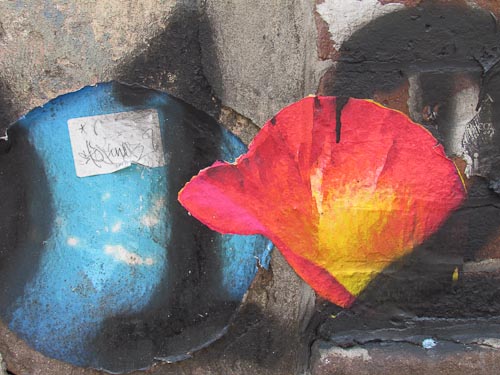
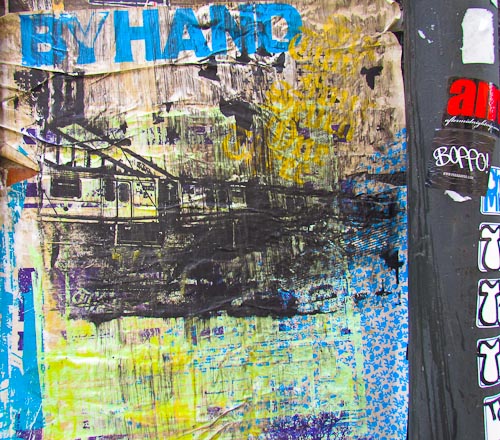
(Pic #1) Detail of graffiti art outside Comme Des Garcons store on 22nd St. and 10th Avenue in the Chelsea district of Manhattan.

They may be total strangers, but graffiti artists, band promoters, and illegal “poster pasters” often meet on the same gritty, decrepit, forgotten walls that make up our urban landscape.  Over a period of years, they unknowingly create partnerships in art making, and change the face of our neighborhoods – for better or for worse.

Together, layer after layer, they build a sensual, textured, visual story I can’t help but explore and dissect.  If you take the time to discover these hidden-yet-public treasures, you might be surprised by their simple beauty. The experience is free, and if you’re armed with a camera, you might celexa take home  some very sweet original art.

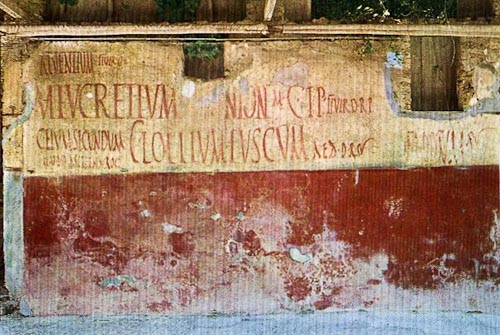
(Pic #2) Earliest known street art: Pompeii

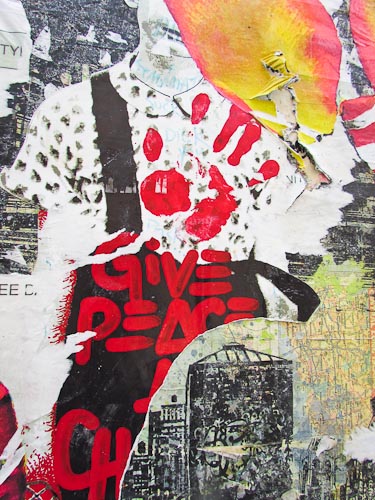
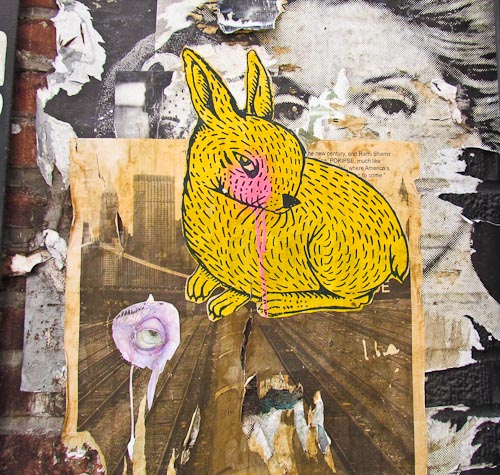
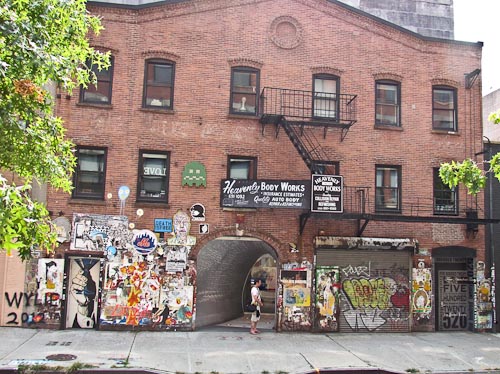
This week I catted around streets in the artsy section of Chelsea in New York. Galleries everywhere, but my art could only be found plastered and sprayed on bricks and mortar. Below, I divided up sections of work from the whole (a large building housing the edgy fashion house, “Commes Des Garcons.”)

Graffiti is nothing new. Archeologists say hundreds of public expressions,  in the form of political opinion and social commentary can be found on the walls of Pompeii — dating back to 79 AD. (Pic #2)

“Papered and sprayed:” Inconspicuous entrance to “Commes Des Garcons” in Chelsea.

Filed Under: Found Art, Travel Tagged With: Chelsea, Commes Des Garcons, free art, graffiti art, graffiti artists, illegal pasting, sprayed walls, street art

Missing Fireflies and Childhood Summer Nights

July 31, 2012 by Lonnie Lardner

Running through Central Park tonight I hit the wall of a different kind. The one that smacks you in the head with a childhood memory that had been lost for 30-plus years. You see, catching lightning bugs was a traditional part of our summer evenings on Long Island in the 1960s. We loved the way they seemed to dart around knowing we were after them  — not to hurt them —  but rather to cherish their magical powers up close — just for a few minutes in a jar while they lit up our nights.

I moved to Southern California in 1985. I never thought about those bugs once I left home. But now I realize how many summers I’ve missed the opportunity to dance with and chase these elusive sparks. My run through the park stopped short tonight when a virtual  battalion of these little treasures lit up the lush green path. Flooding my head with really lovely accutane memories of those carefree days I got a bit choked up, a little misty, and then I wept.

I had  to find out why these special creatures don’t live – and light – on the West Coast. Well scientists say they love warm, humid climates, an in the U.S., almost no species of fireflies is found west of Kansas. I also learned:

a) they are nocturnal, the reason they light up is to attract a mate, and they are part of the beetle family

b) the females have brighter and bigger lights (Too obvious, don’t go there.)

c) their enzyme luciferin — that allows them to glow — generates light, but not heat.

From my favorite poet:

Fireflies in the Garden

Here come real stars to fill the upper skies,
And here on earth come emulating flies,
That though they never equal stars in size,
(And they were never really stars at heart)
Achieve at times a very star-like start.
Only, of course, they can’t sustain the part.

Robert Frost

Filed Under: Found Art Tagged With: childhood memories, fireflies, insects, lightning bugs, summer nights

Today’s Pic: Inosculation — The Art of Branching Out

July 28, 2012 by Lonnie Lardner

Sycamore trees find each other – and join for life –  San Fernando Valley, California.

I’m not sure what the divorce rate is among sycamore trees these days, but it’s got to be better than ours. A recent visit to the home of my friends Scooter and Marilyn gave me proof. Two neighboring tree trunks in their Sherman Oaks front yard had merged in a rock-solid bridge between the pair. It was lovely. Even romantic. A union for life.

The grafting process is called inosculation — a natural phenomenon where the branches or trunks first grow separately near each other until they touch. Then, as the trees move in the wind, the bark on the brushing surfaces gets scraped away, and the two become one. Sometimes the coupling even happens outside species.

Filed Under: Found Art Tagged With: conjoined trees, grafting, inosculation, sycamores, trees

  • « Go to Previous Page
  • Page 1
  • Interim pages omitted …
  • Page 12
  • Page 13
  • Page 14
  • Page 15
  • Page 16
  • Interim pages omitted …
  • Page 21
  • Go to Next Page »

Subscribe here:

Categories

  • Art Table Tips
  • Artist Spotlight
  • Creative Zone
  • Eco-Art
  • Found Art
  • Newsmakers
  • Quotes
  • Reflections
  • Travel
  • Uncategorized

Archives

Hey Brubeck, Take THIS.

The Alien And The Volcano: Why Do Our Brains Need to Make Order Out of Chaos?

Wait — So How Do YOU Choose a restaurant?

Meet Creative Voltage!

Sometimes Your Cat Just Makes The Art FOR You

2026: Kicking Fear to the Curb

Choosing Gratitude. But for a paintbrush?

Every Page Is A Treasure: Discovering Plastikcomb

Calling all artists — INKTOBER is here! Whaaaaa?

Art From The Ashes

One Click — One Masterpiece?

When Art F*cks With Your Head

The Perfect One-Liner

Portland: A Tale Of One City – Through Two Lenses

Happy New Year!

Allowing The Moment To Emerge

How Can A 5-Year-Old Be My Muse?

Stunning, Simple Beauty

An Unexpected Collaboration With Nature

Pathetic Shoe Obsession: WTF?

Copyright © 2026 · Dynamik-Gen on Genesis Framework · WordPress · Log in