The Lardner Report

Unleash your creative superpowers!

  • Home
  • Creative Voltage Website
  • Contact
  • Archives
  • About

Losing Focus: It’s A Good Thing

November 27, 2012 by Lonnie Lardner

(Pic #1) Sharp focus – dull image.

“Focus!”  We hear it from teachers, coaches, bosses even spouses.

“Focus!” Put all extraneous thoughts out of your head and concentrate on the task at hand.  Focus is that single-mindedness that allows us to achieve. Without it, the greatest of intentions often disappear into the mist of fanciful daydreams. Focus can be your best friend when you are vigorously attacking your to-do list. But it can be your worst enemy when it comes to creating art.

Don’t get me wrong, attention to detail is important in art, and I suppose that requires some focus, but the engine that drives the artist is creativity, and that often requires the exact opposite of focus. It requires letting your mind run free, tuning into the seemingly random, unconnected sights and sounds that inspire great art.

Often the focused, crystal clear view of the world can mask an incredible universe of beauty that emerges when we blur our vision a bit.
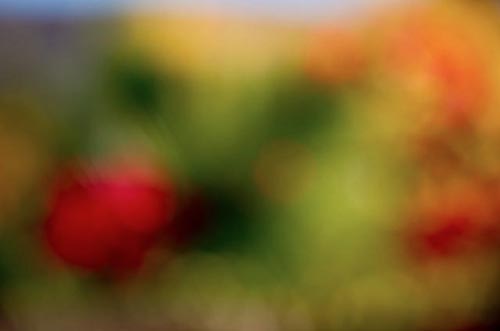
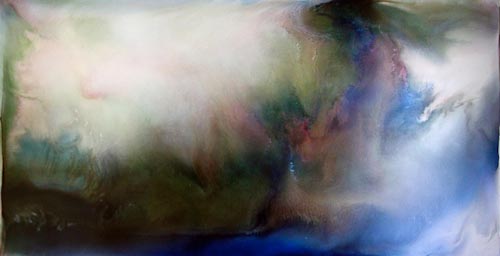
(Pic #2) Sparing the details: the beauty of losing focus

In Kindergarten, I remember asking my best friend Tana Klugherz if she could “look blurry-eyed” at something – and do it on command, as I could. It was such a thrill to shift the world totally out of focus – into a palette of soft colors.  It turned everything into a lovely abstraction. Now I get to explore and change my view with technology and a good camera. Maybe not as fun – but still pretty magical.

On top of the page (Pic #1):  a shot of a bougainvillea branch in our backyard.  Nice photograph, well composed, perfectly in focus. No interpretation necessary, no imagination needed. Picture #2 (above) is almost exactly the same shot, but purposely out of focus.  Suddenly the colors and shapes become ethereal, suddenly they invite — in fact demand  — the viewer’s imagination.

Lose your focus — find your inner artist.


Filed Under: Creative Zone Tagged With: art making, attention to detail, creativity, happy accidents, losing focus, photography, sharp focus, soft focus

Left Brain – Right Brain: In Living Color

January 10, 2012 by Lonnie Lardner

Smash Hit: Ad Campaign for Mercedes Benz Israel by Y&R Interactive, Tel Aviv

It’s not hard to see that the brains behind this stunning print campaign lean right.  The images showcase the qualities of the two opposing parts of the brain that complement each other: the left side, responsible for analysis and logic — juxtaposed with (or maybe more accurately – compatible with) the more creative, intuitive side. The message, according to Communication Arts,  is that “Mercedes Benz, like the brain, represents a combination of opposites that together create technological innovation, breakthrough engineering, inspiring design and passion.”

Whatever. I stand in awe of this sweet, super-clever metaphorical celebration of science and art.

A closer look: The text in the copy for the left brain reads:

“I am the left brain. I am a scientist. A mathematician. I love the familiar. I categorize. I am accurate. Linear. Analytical. Strategic. I am practical. Always in control. A master of words and language. Realistic. I calculate http:healthsavy.com equations and play with numbers. I am order. I am logic. I know exactly who I am.”

Text in the copy for the right brain reads:

“I am the right brain. I am creativity. A free spirit. I am passion. Yearning. Sensuality. I am the sound of roaring laughter. I am taste. The feeling of sand beneath bare feat. I am movement. Vivid colors. I am the urge to paint on an empty canvas. I am boundless imagination. Art. Poetry. I sense. I feel. I am everything I wanted to be.”

And if you’re still wondering where you fit — you can always take this Left Brain – Right Brain Test here. For more Mercedes images, click here.


Filed Under: Creative Zone Tagged With: analytical, balanced brained, creative instincts, creativity, left brained, Mercedes ad, right brained

Art vs: Science — Which Is More Important?

May 23, 2011 by Lonnie Lardner

Painting by Suzan Woodruff: Water Lilies' Dream, Acrylic on Panel, 2010

“Science is what allows us to survive, but art makes the survival bearable.”

GUEST POST  by Professor Chris Staley, School of Visual Arts, Penn State University

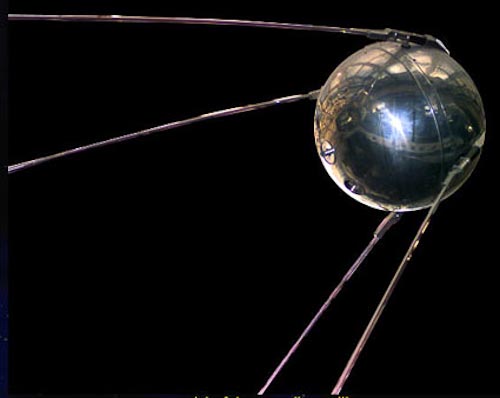
Which is more important: science or art? Most people would say science. In answering this question I can’t help but think of the word Sputnik, and my grandfather James Killian.  In 1957, when the Soviet Union launched Sputnik, the first man-made satellite, it extended the Cold War into space and altered the trajectory of my life. (Pic #2) At that time my grandfather was the president of the Massachusetts Institute of Technology and shortly after Sputnik was launched he was chosen by President Dwight Eisenhower to be the first full-time scientific adviser to the president. In my mind, my grandfather became “Mr. Sputnik.”

(Pic #2) The Soviet Union launched Sputnik 1 on Oct. 4, 1957 - a beach ball-sized sphere that took about 98 minutes to orbit Earth.

What most people did not know about this leader of science was that he also was an artist. He was an active painter and sculptor. I have vivid memories from my youth of walking around his cluttered studio above the garage and seeing works of art in progress. Equally indelible are comments he made about art’s ability to inspire us all to learn.

When school boards and college administrators are faced with budgetary cutbacks, art classes are often the first to be deemed expendable. However, in these times of accelerating change we need art in our schools more than ever. Why? At its core, art is about asking questions and exploration. More than ever, we live in a world that needs creative solutions to difficult social, political and economic problems.

The essence of art is creativity. If we are afraid of failure and consumed with getting the right answer, it inhibits our ability to explore a wide range of creative options. The search for new ways of seeing and understanding is at the heart of both womans health scientific and artistic discovery.

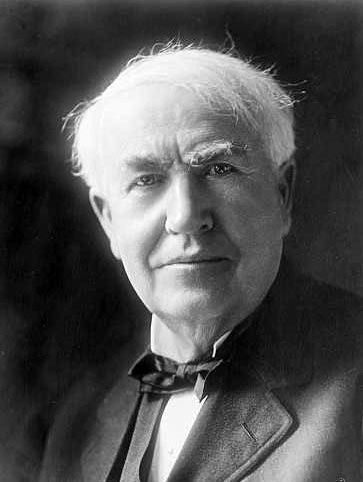
(Pic #3) Inventor Thomas Edison: on genius

It was Thomas Edison who famously said, “Genius is 1 percent inspiration, 99 percent perspiration.”(Pic #3)  In other words, the creative process can save us from the poverty of our intentions. This willingness to simply try things for the sake of trying things is a leap of faith. It is the belief that play and chance have inherent value that can lead us to great discoveries.

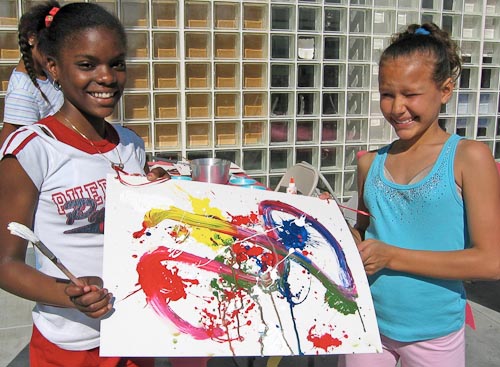
Young artists participating art workshops in South Central Los Angeles.

Increasingly our educational system is based on a means to an end. It’s an environment geared toward memorization and test results, not creative, explorative learning. We have lost sight of the fact that we learn not just with our minds, but also with our hearts. Once my 9-year-old daughter Tori asked me, “Dad who is more creative, children or adults?” I said, “I don’t know. Who do you think?” She said, “I think children are because we have more time.”

Her poignant insight confirms what we know — that slow time can allow for meaningful moments of reflection. Yet in a society that emphasizes efficiency and production, the notion that play and time to reflect are an integral part of learning can easily be dismissed.

In his book “The Education of a College President,” my grandfather wrote, “In a very deep sense art and science are interdependent, and they spring from the same act of imagination.” During difficult economic times, fear and anger can negatively influence our decisions to move forward in a positive direction. In contrast, art can inspire our imaginations to move beyond our fears, to a more promising way to live.

We need the foresight and courage to create classrooms where exploration and play are encouraged. We need to remember that questions are just as important as answers.

Editorial courtesy of the author and Centre Daily News.  First published May 9th, 2011


Filed Under: Creative Zone Tagged With: art education, Chris Staley, creative stimulation, creativity, imagination, ingenuity, inspiration, James Killian, science vs: art, scientists, Sputnik, Thomas Edison, value of art in science

  • « Go to Previous Page
  • Page 1
  • Interim pages omitted …
  • Page 6
  • Page 7
  • Page 8

Subscribe here:

Categories

  • Art Table Tips
  • Artist Spotlight
  • Creative Zone
  • Eco-Art
  • Found Art
  • Newsmakers
  • Quotes
  • Reflections
  • Travel
  • Uncategorized

Archives

Hey Brubeck, Take THIS.

The Alien And The Volcano: Why Do Our Brains Need to Make Order Out of Chaos?

Wait — So How Do YOU Choose a restaurant?

Meet Creative Voltage!

Sometimes Your Cat Just Makes The Art FOR You

2026: Kicking Fear to the Curb

Choosing Gratitude. But for a paintbrush?

Every Page Is A Treasure: Discovering Plastikcomb

Calling all artists — INKTOBER is here! Whaaaaa?

Art From The Ashes

One Click — One Masterpiece?

When Art F*cks With Your Head

The Perfect One-Liner

Portland: A Tale Of One City – Through Two Lenses

Happy New Year!

Allowing The Moment To Emerge

How Can A 5-Year-Old Be My Muse?

Stunning, Simple Beauty

An Unexpected Collaboration With Nature

Pathetic Shoe Obsession: WTF?

Copyright © 2026 · Dynamik-Gen on Genesis Framework · WordPress · Log in