The Lardner Report

Unleash your creative superpowers!

  • Home
  • Creative Voltage Website
  • Contact
  • Archives
  • About

Handwriting: A Lost Art — Found Again

August 14, 2011 by Lonnie Lardner

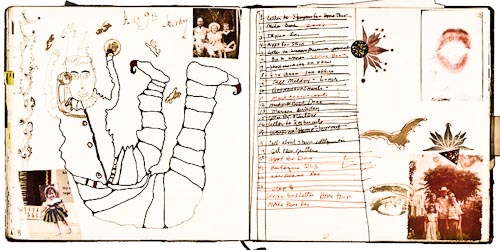
(Pic #1) “To-do” list with illustrations by artist Janice Lowry, 2003

Morgan Library showcases the beauty — and intimacy — of artist “LISTS.”

If you’re Generation Y, or in the latest group of tech-savvy kids who don’t remember life before texting, my hunch is good penmanship is not on your BFF list. In fact, TIME Magazine posits “we are witnessing the death of handwriting.”

According to an NPR survey, More than 8 in 10 Americans under age 60 currently use a computer at home or work. Most Americans say technology has significantly improved their lives, and they are demonstrating their enthusiasm through purchase power.

What does this mean? According to Steve Graham, a special-education and literacy professor at Vanderbilt University, the simple fact is — “Handwriting is just not part of the national agenda anymore.” As I see it, now the only professionals who consistently use handwriting in their work are doctors — and they suck at it.

But when you see The Morgan’s exhibition (from the Smithsonian’s Archives of American Art) you can’t help but be charmed by the personal, handwritten thoughts, inventories, and scribblings of some of the world’s most accomplished artists and writers of the last two centuries. And if you’re like me, you wonder if this personal method of record-keeping, list-making, and journaling will be lost — to endless pages of plebian helvetica medium font — forever.
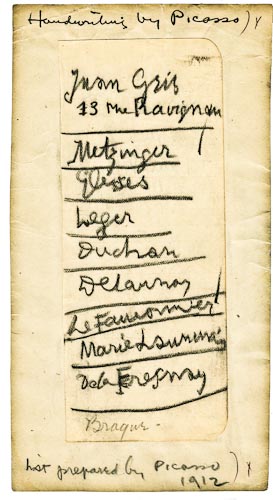
(Pic #2) Picasso’s list of recommended artists 1912

There’s something so intimate about seeing Picasso scratch out Marcel Duchamp’s name phonetically, (Pic #2) as he informally lists European artists he recommends for the 1913 Armory Show (including Gris and Leger) — the first international exhibition of Modern art in the United States. And of course it was Duchamp’s “Nude Descending a Staircase” that took the art world by surprise that year.

Assemblage artist Janice Lowry kept a journal for nearly forty years that filled 126 bound volumes. (Pic #1)  Peppered adhd with to-dos —“make plane reservation…. skin appointment,” and “get rain gutters” — she also weaves in dreams and random thoughts — each page thick with collaged images, paint, stamps, and stickers.
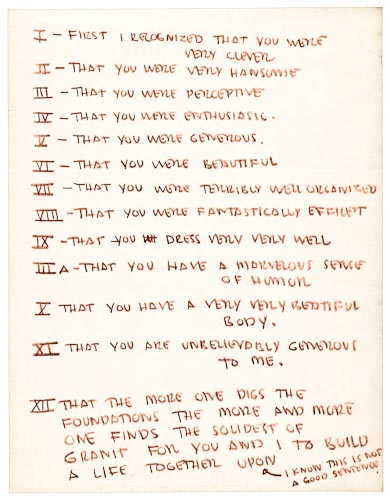
(Pic #3) Eero Saarinen lists his love’s “good qualities” 1954


Architect Eero Saarinen’s “list of good qualities” — written in all caps — for Aline Bernstein,  the woman who would become his second wife — shows a certain vulnerability, as he notes on the bottom, “I know this is not a good sentence.” (Pic #3)

In the sketchbook of Adolf Konrad, (Pic #4) we find an illustrated list of things the artist needed to pack for his trip to Rome and Egypt in 1962 — and on one page, he included a drawing of himself wearing nothing but his underwear.
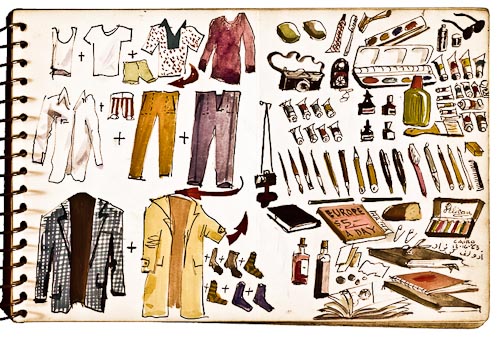
(Pic #4) Adolf Konrad’s “packing list” 1963

Mobile sculptor Alexander Calder’s handmade address book, circa 1930, casually lists the street addresses for iconic figures like Constantin Brancusi, Hans Arp, and other members of the Parisian avant-garde. (Pic #5)
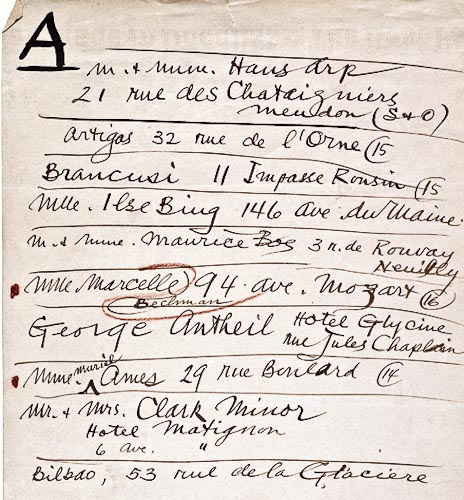
(Pic #5) Calder’s avant-garde 411

The exhibit, at The Morgan Library and Museum in midtown New York, also features notes from Lee Krasner, Elaine de Kooning, Grant Wood, and H.L Mencken. The experience sent me back to the first time I ever saw Henri Rousseau’s “The Dream” at MOMA. I stood there aghast, staring, in awe that I could finally see the original work I had admired since I was 10. Reproductions did not do it justice.

There’s something so human — so connective — about seeing evidence of an artist’s personal touch — right there on the paper or canvas in front of you. Graphologists will tell you handwriting can define a personality or reveal one’s true self-image. “LISTS” provides us with one more tool with which we can explore some of the art world’s most creative minds.

“LISTS” runs through October 2nd.



Filed Under: Newsmakers Tagged With: Adolf Konrad, Alexander Calder, Duchamp, Eero Saarinen, handwriting, Janice Lowry, lists, Morgan Library, penmanship, Picasso notes, printed vs: handwritten, the death of handwriting

Salvaging Beauty from Destruction

June 30, 2011 by Lonnie Lardner

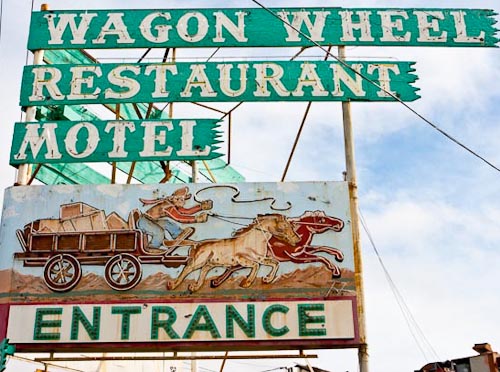
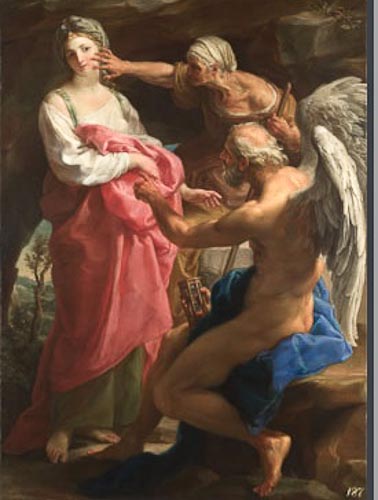
Left: Pompeo Batoni painting: “Time Orders Old Age to Destroy Beauty” (1746). Right: Wagon Wheel Motel Excavation unearths fresh art (2011). Photo by Juan Carlo Mendoza, Ventura County Star.

The demise of a local landmark reveals stunning visual treats.

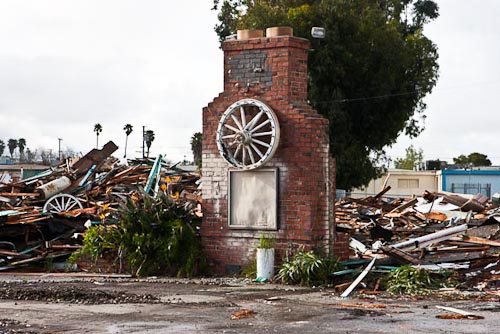
In my last post, I wrote about the demolition of one of Southern California’s most recognizble roadside landmarks, the Wagon Wheel Motel on Interstate 101 in Oxnard.

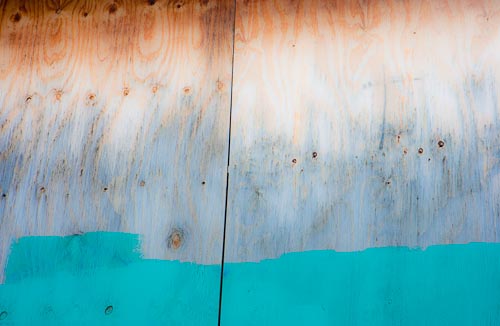
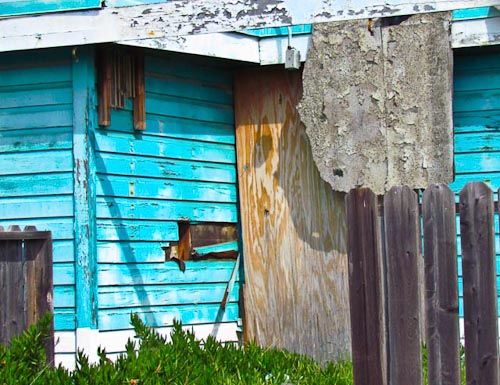
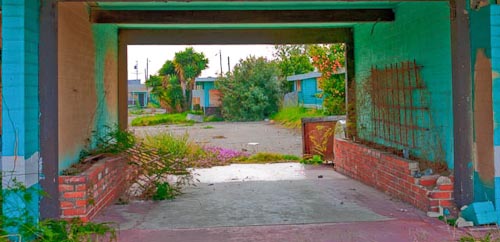
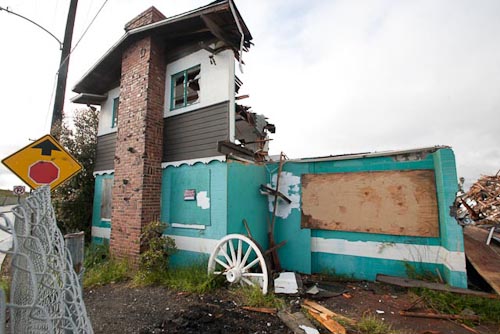
Given its storied history, it hurt to watch it gradually disintegrate into a pile of splintered beams and waste. But I always try to see something anti inflammatories visually fresh in my lens. So I documented the last days of the iconic structure with the hope of creating a few canvases of abstract art.

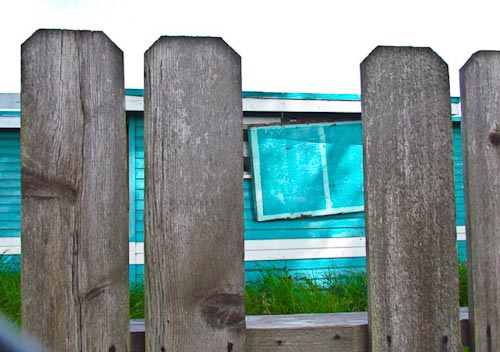
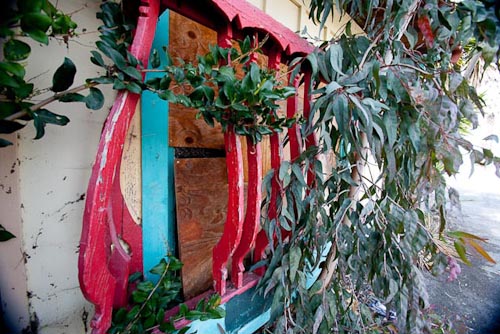
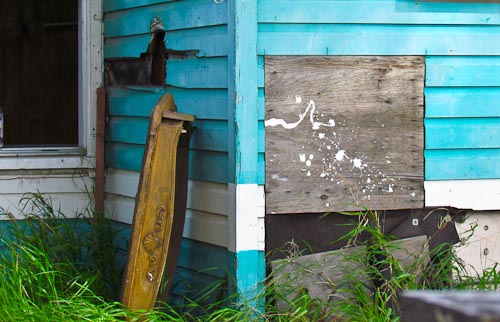
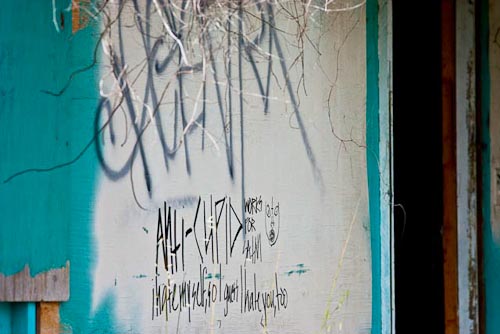
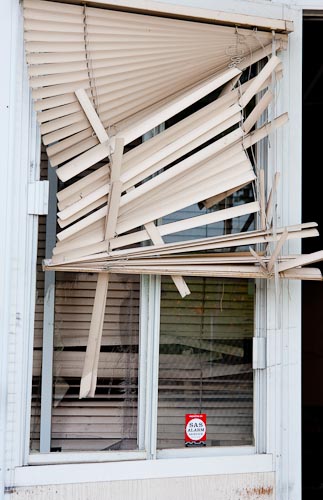
Suddenly, the 1960 turquoise paint seemed elegant, and the property’s broken wooden fence perfectly framed the vibrating lines and textures destined for the landfill. Graffiti became a decorative touch, and cheap, crumpled window blinds gave me a new way to understand geometry.

Am I crazy?

Maybe. But delighted I got to embrace the beauty left by the storm.

Filed Under: Newsmakers Tagged With: Abstract art, americana, discovering art in destruction, Finding art everywhere, graffiti, Oxnard landmark, Pompeo Batoni painting, roadside landmark, Wagon Wheel Motel

Wagon Wheel Motel: A Slice of Americana Slowly Decays — Then Disappears For Good

June 29, 2011 by Lonnie Lardner


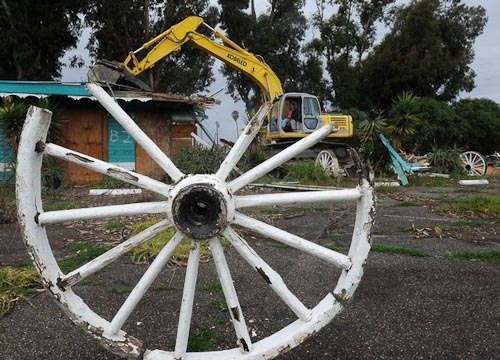
(Pic #1) Wagon Wheel Motel - A Day of Demolition

Oxnard, California:

Back in the 1960s, my husband’s Russian grandmother Rose used to call it “The Vagon Wheel” or alternatively, “The Wagon Veal.”  Her “Ws” never matched, but hearing her say either one of those phrases always gave his family a chuckle. So when I first passed by this iconic, uber-quirky structure in the 90s, I’d have to say it that way too. I still do. Even though now — it’s a heap of broken beams and splintered glass. (Pic #2)

(Pic #2) Wagon Wheel demo site: March 27th, 2011

A structure with history — but not “historical”

The somewhat awkward looking freeway-flanked motel was built on the site of an old hog farm by Martin V. Smith in 1947. It became a Southern California landmark, a popular stop for cross-country vacationers, or Angelenos passing through to Santa Barbara. According to Steve Chawkins of the L.A. Times, the kitchy roadside stop…

“…was decorated by a Hollywood set designer when westerns ruled the screen, it was a spot where residents would take out-of-towners for a thick steak, where visitors would enjoy cocktails on the barroom’s cowhide seats and gaze at the brands of local ranchers burned into the beams above.”

(Pic #3) At least they're saving the sign

(Pic #4) Last days: March 6th, 2011

The Wagon Wheel was considered  an authentic example of American roadside architecture from the mid-century (Pic #4).  But it didn’t make the city’s cut as a designated “historical landmark.” And local preservationsists from the San Buenaventura Conservancy lost the lawsuit to keep the main motel building in tact, before the 64-acre commercial swath makes way for 1,500 new homes — including two 25-story apartment towers.


(Pic #5) A classical take on urban decay

“Time orders Old Age to Destroy Beauty” 1746, by Pompeo antibiotics Girolamo Batoni

This has always been one of my favorite classical paintings – which I stumbled upon during a visit to the National Museum in London when I was 18. To me, the title is as daunting as the work: “Time Orders Old Age to Destroy Beauty” – by Pompeo Girolamo Batoni, commissioned in 1746. The winged figure of Time (foreground), who holds an hourglass, commands Old Age to obliterate the stunning woman’s elegant visage. (Pic #5)

In his recent article – referring to the ultimate destruction of  (what I might call ) this “funked-out” piece of property — Chawkins uses the phrase “wounded by time.” He nailed it.

(Pic #6) Nature always finds its way

In the last few years, it became abundantly clear that time had ravaged this admitedly unconventional example of modern day architecture.  As tourists sped by on the 101 Freeway, they could see the abandoned property had turned into temporary digs for transients and a playground for skateboarders.  The structures’ shingles buckled, their paint peeled, wiring was stripped by scavengers, and weeds and brush tried to push up and reclaim what was once theirs – as nature always does. (Pic #6)

(Pic #7) "The last room available" March 27th, 2011

While the Wagon Wheel façade may not be considered “classic looks” by any stretch, its originality – its authenticity – cannot be denied. But it had sadly become what conservationist Stephan Schafer calls “the victim of calculated neglect.” (Pic #8)

(Pic #8) Victim of "calculated neglect?"

Still, photographing the gradual demise of the Wagon Wheel, I found what I consider to be a series of lovely abstract images – documenting her decomposition. A sort of visual record of “Time ordering Old Age to destroy  Beauty.”

(See next post for additional images.)

Photo Credits: (Pics #1–7): Josh Kaplan, (Pic #8): Juan Carlo Mendoza, Ventura County Star.


Filed Under: Newsmakers Tagged With: American history, americana, Batoni painting, disappearing roadside icons, National Museum, new development, oxnard, roadside architecture, urban decay, Wagon Wheel Motel

  • « Go to Previous Page
  • Page 1
  • Interim pages omitted …
  • Page 11
  • Page 12
  • Page 13
  • Page 14
  • Page 15
  • Page 16
  • Go to Next Page »

Subscribe here:

Categories

  • Art Table Tips
  • Artist Spotlight
  • Creative Zone
  • Eco-Art
  • Found Art
  • Newsmakers
  • Quotes
  • Reflections
  • Travel
  • Uncategorized

Archives

Hey Brubeck, Take THIS.

The Alien And The Volcano: Why Do Our Brains Need to Make Order Out of Chaos?

Wait — So How Do YOU Choose a restaurant?

Meet Creative Voltage!

Sometimes Your Cat Just Makes The Art FOR You

2026: Kicking Fear to the Curb

Choosing Gratitude. But for a paintbrush?

Every Page Is A Treasure: Discovering Plastikcomb

Calling all artists — INKTOBER is here! Whaaaaa?

Art From The Ashes

One Click — One Masterpiece?

When Art F*cks With Your Head

The Perfect One-Liner

Portland: A Tale Of One City – Through Two Lenses

Happy New Year!

Allowing The Moment To Emerge

How Can A 5-Year-Old Be My Muse?

Stunning, Simple Beauty

An Unexpected Collaboration With Nature

Pathetic Shoe Obsession: WTF?

Copyright © 2026 · Dynamik-Gen on Genesis Framework · WordPress · Log in